

























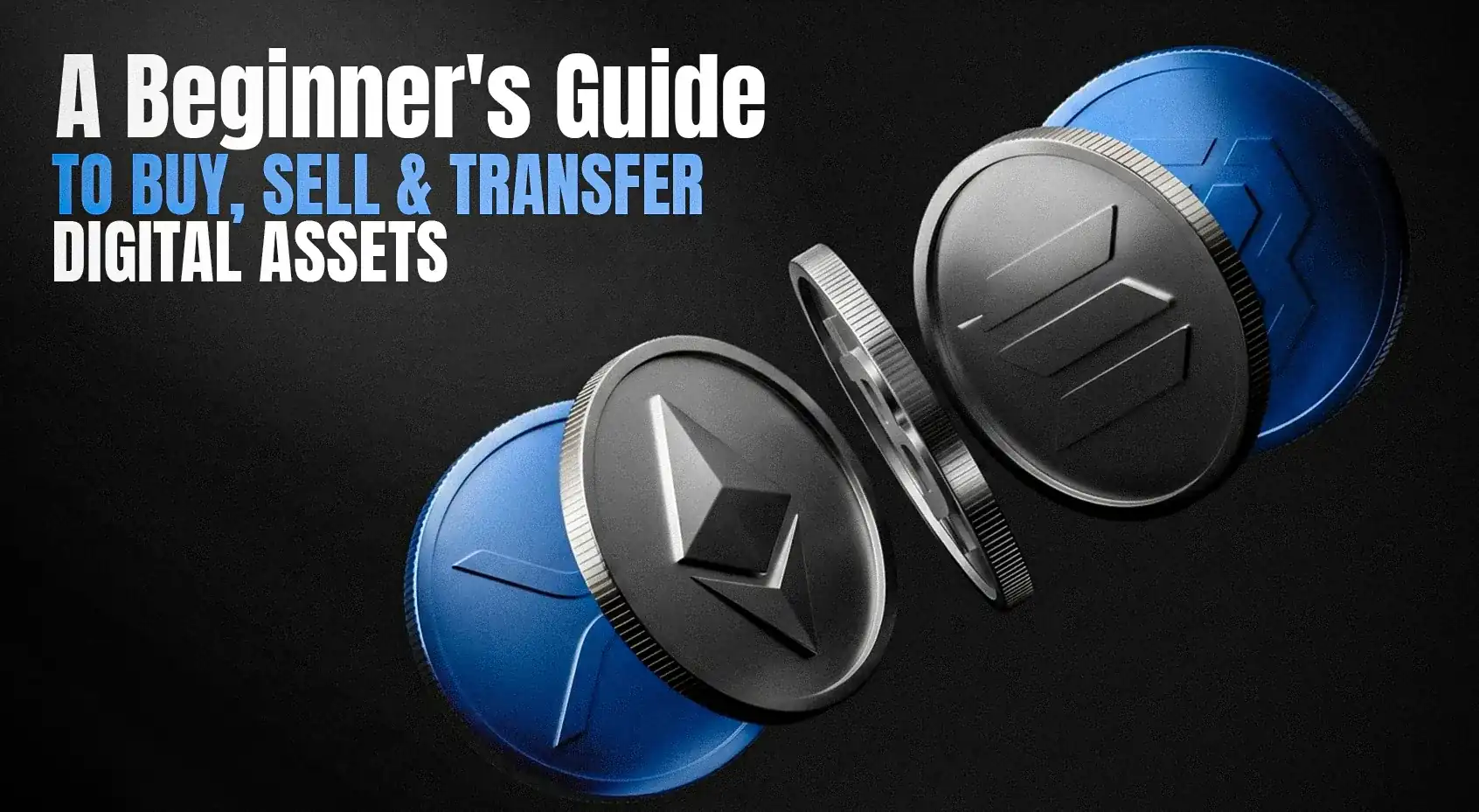
A Beginner's Guide: How to Buy, Sell & Transfer Digital Assets
Ever looked into cryptocurrency and wondered where do I begin? Coming across this question is quite normal. The world of digital assets may seem like a maze filled with wallets, blockchains, and charts that look like roller coasters. At first glance, it feels like everyone else already knows the rules while you're still trying to understand the game. But here's the truth: every experienced crypto investor was once a beginner too.
You don't need to memorize complicated terms or predict the market to get started. You just need the right foundation. Learning how to buy, sell, and transfer digital assets is much easier than social media makes it appear. This digital asset guide breaks everything down into simple steps so that you can enter the crypto world with confidence, not confusion.
What Are Digital Assets?
Think of digital assets as anything you own digitally that has real value. Along with cryptocurrencies, digital assets also include NFTs, Web3 tokenized real-world assets, stablecoins, and other blockchain-based collectibles. Unlike traditional assets that are managed by banks or centralized institutions, digital assets are stored and transferred through blockchain technology, giving users greater control over their ownership.While knowing about digital assets for beginners purposes, the most important thing to remember is this: every digital asset exists on a blockchain, which acts like a tamper-resistant digital ledger that records every transaction securely and transparently. Once a transaction is verified, it becomes extremely difficult to alter, making blockchain one of the most secure technologies for managing digital ownership.
Understanding this fundamental concept will help you make sense of everything else in the crypto ecosystem. Once you understand how blockchain works, you've already overcome one of the biggest learning curves in crypto.
How to Buy Digital Assets Without Feeling Overwhelmed
You're wondering how to buy digital assets. The process is surprisingly straightforward.Step 1: Choose the Right Crypto Wallet
The first step is deciding which type of crypto wallet for beginners suits your needs. If you trade frequently, a hot wallet offers quick and easy access. If you're planning to hold your crypto for months or years, a cold wallet provides stronger security by staying offline.Step 2. Download or Purchase Your Wallet
Once you've chosen a wallet type, get it from a trusted source. Download hot wallets only from their official website or app store, and purchase cold wallets directly from the manufacturer's official store to reduce the risk of scams or tampered devices.Step 3. Set Up Your Wallet Securely
Follow the setup instructions to create your wallet. Use a strong, unique password and enable two-factor authentication (2FA) if it's available. These simple steps add an extra layer of protection to your digital assets.Step 4. Back Up Your Recovery Phrase
During setup, your wallet will generate a recovery phrase, usually 12 or 24 random words. Write it down and store it somewhere safe offline. Never save it in screenshots or cloud storage or share it with anyone. This phrase is the only way to recover your wallet if you lose access.Step 5. Transfer Your Crypto and Stay Protected
Once your wallet is ready, transfer your digital assets from the exchange to your wallet. Before sending a large amount, make a small test transaction to ensure everything is correct. Always double-check wallet addresses and keep your private keys confidential to protect your investments.That's it; you're officially a crypto owner. Never try to share your private keys or recovery phrase. If someone gets access to them, they get access to your crypto, and in the end, you will end up with nothing.
Your Crypto Needs a Home
Buying crypto is only the first step; keeping it secure is just as important. A crypto wallet acts like your digital vault, storing the private keys that give you access to your digital assets on the blockchain. Without these keys, you can't send, receive, or manage your crypto. Choosing the right wallet helps protect your investments from hacks, scams, and unauthorized access.Hot Wallets: Quick and Easy to Use - Hot wallets are connected to the internet, making them ideal for beginners and everyday trading. They let you buy, sell, and transfer crypto with ease through mobile or desktop apps. Since they're always online, it's important to use strong passwords, enable two-factor authentication (2FA), and download wallets only from trusted sources.
Cold Wallets: Built for Maximum Security - Cold wallets store your private keys offline, making them much safer from hackers and online threats. They're the preferred choice for long-term investors who want to keep their crypto secure. While they're slightly less convenient than hot wallets, the added protection makes them ideal for storing larger amounts of cryptocurrency.
How to Sell Digital Assets Like a Pro
Sooner or later, you may want to sell digital assets. Maybe you've made a profit. Maybe you want to rebalance your portfolio. Or maybe you simply need cash. Selling works almost the same way as buying.Step 1. Choose the Digital Asset You Want to Sell
The first step is deciding which cryptocurrency or digital asset you want to sell. Before making a move, review your investment goals and current market conditions. Whether you're taking profits or rebalancing your portfolio, avoid making decisions based solely on short-term price movements.Step 2: Place Your Sell Order
Log in to your cryptocurrency exchange, select the digital asset you want to sell, and choose how much you wish to sell. Most exchanges let you place either a market order for an instant sale or a limit order if you want to sell at a specific price.Step 3. Review the Transaction Details
Before confirming your sale, carefully check the amount you're selling, the current market price, transaction fees, and the amount you'll receive. Taking a few extra seconds to review the details can help prevent costly mistakes.Step 4. Withdraw Your Funds Safely
Once the sale is complete, you can keep the funds in your exchange wallet or withdraw them to your linked bank account if your platform supports it. If you plan to stay invested, consider transferring your remaining crypto to a secure wallet for added protection.The biggest mistake beginners make is selling based purely on emotion. Prices rise, prices fall. Instead of panic-selling every dip, create a strategy before you invest and stick to it.
How to Transfer Digital Assets Safely
Learning to transfer digital assets is one of the most important crypto skills. You might transfer crypto from an exchange to your personal wallet or send it to another person. All you need is the recipient's wallet address.Step 1. Get the Correct Wallet Address
Before transferring digital assets, ask the recipient for their wallet address and make sure it supports the cryptocurrency you're sending. Sending assets to an incompatible wallet or blockchain network can result in permanent loss.Step 2. Double-Check Every Detail
Always verify the wallet address, blockchain network, and transfer amount before clicking "Send." Even a single incorrect character in the wallet address can send your funds to the wrong destination.Step 3. Send a Small Test Transaction First
When transferring a large amount, it's smart to send a small test transaction first. Once the recipient confirms they received it successfully, you can confidently transfer the remaining balance.Step 4. Confirm the Transfer on the Blockchain
After sending your digital assets, use the transaction ID (TXID) to track the transfer on a blockchain explorer. Once the required network confirmations are complete, the assets will appear in the recipient's wallet, confirming the transfer was successful.Blockchain transactions are usually irreversible. Sending crypto to the wrong address is like mailing a package to the wrong house. You probably won't get it back. Many experienced investors even send a small test transaction first before transferring larger amounts.
Before you start imagining life-changing gains, it's worth learning how the crypto world actually works. Discover what cryptocurrency is and how to buy, sell, and invest in digital assets, and learn how to spot common scams before they catch you off guard. Whether you're taking your first step into blockchain or looking to level up your knowledge, the Crypto Network ForumCrypto Network Forum is your go-to space for trusted insights, real conversations, and a community of curious minds who share your vibe.