



























FinThreats
May 28, 2026
· 👁 224 views
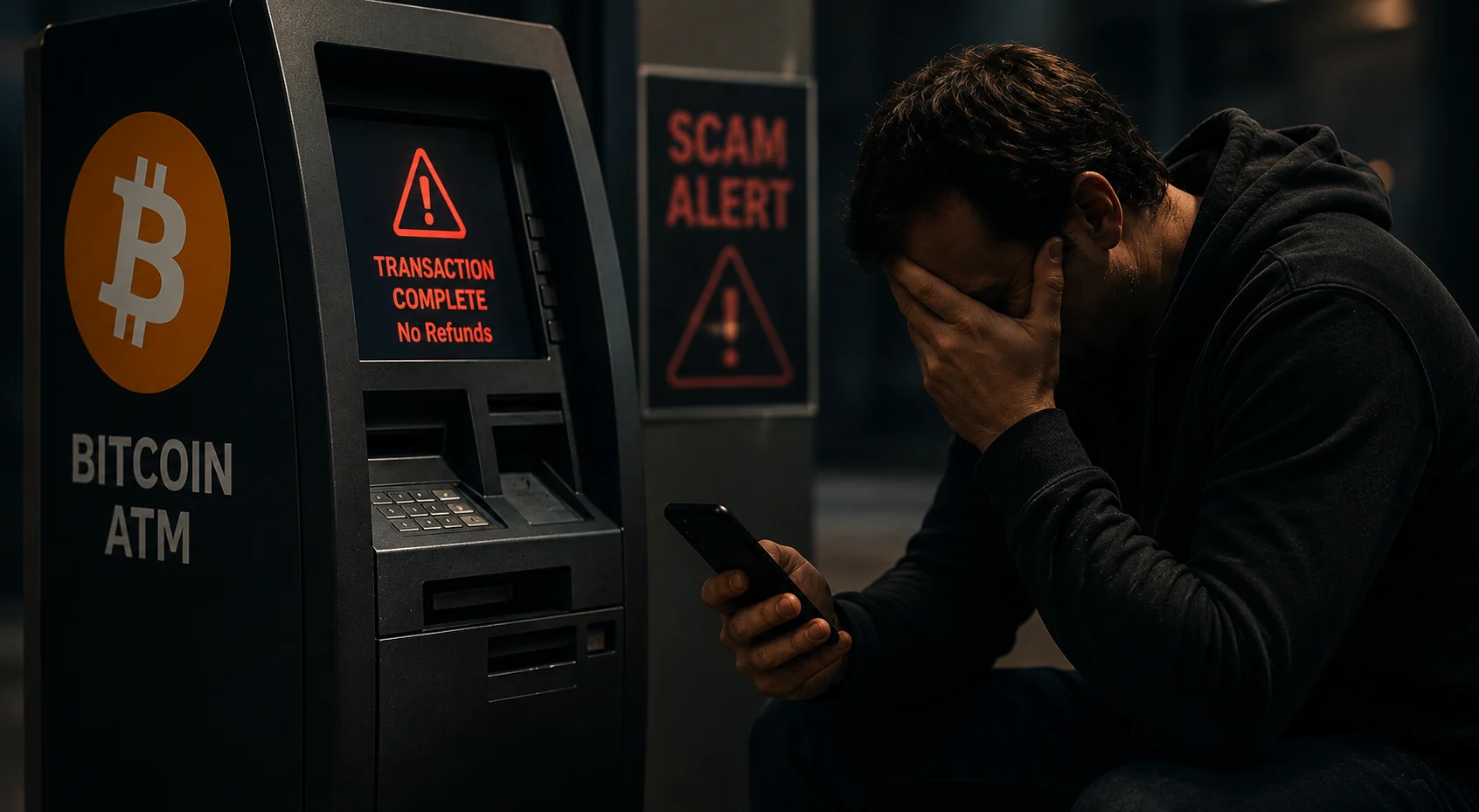
How People Realize They’ve Fallen for a Bitcoin ATM Scam After Losing Money
CR
Crypto Network Forum Blog
by @cryptonetworkforum · May 28, 2026
A few years ago, most people barely knew what a Bitcoin ATM was. Now in 2026, these machines are everywhere across America, sitting inside gas stations, convenience stores, malls, and random shops, looking completely harmless. Unfortunately, nowadays, Bitcoin ATM scams have become one of the fastest-growing crypto fraud trends online.
The scary part is that many victims don’t even realize they are being scammed while it is happening. Everything feels urgent, emotional, and confusing at the same time. By the moment they understand what happened, the crypto is already gone into the blockchain void forever. So let’s break down how these scams actually work. You will get to know about that in this blog.
What Even Is A Bitcoin ATM?
A Bitcoin ATM works kind of like a normal ATM, except instead of withdrawing cash, people can buy Bitcoin on ATMs plus they can send crypto or transfer digital money from one wallet to another.You put money into the machine, scan a wallet QR code, and the crypto gets transferred. sounds simple, and scammers love that simplicity.
How Bitcoin ATM Scams Usually Start
Most scams do not begin at the ATM itself. They usually begin with a fake call, message, or email saying something is wrong and sounding scary, making you panic. The scammers pretend to be your bank, cops, Amazon support, Microsoft support, or crypto security teams. Then comes the panic storyline. They’ll say things like Your account is compromised, Someone stole your identity, or You have unpaid taxes. There’s a warrant under your name. Basically, turning your random Tuesday into a Netflix crime episode.Why Older People And Beginners Get Targeted
Scammers often target beginners in the crypto market, or elderly people who don't know much about the digital world, or people who are unfamiliar with blockchain. Because confusion creates fear. And fear makes people act fast without questioning things properly.Biggest Signs Of A Bitcoin ATM Scam
Look out for those signs to avoid becoming the next victim of this scam.Payment Demand using Bitcoin immediately
This is one of the biggest scam warnings in crypto fraud. Scammers often demand Bitcoin because crypto payments are fast and usually cannot be reversed once sent. Real banks, companies, or government agencies do not ask people to solve urgent problems through Bitcoin payments.Request to Keep This Secret.
Scammers often tell victims not to inform family, friends, or banks because they know other people may recognize the scam quickly. Secrecy helps scammers keep control of the situation and creates more panic.Scammer Asks Not to Contact Your Bank
This is another classic manipulation tactic used in Bitcoin ATM scams. Scammers know banks may freeze suspicious transactions or warn victims before money is lost. That is why they try to stop people from speaking to financial institutions.Asking to Scan an Unknown QR Code
QR code scams are becoming very common in crypto fraud cases. Scammers send fake QR codes through messages or emails and guide victims to scan them at Bitcoin ATMs. Once scanned, the money gets transferred directly into the scammer’s wallet within seconds.Convincing That Your Money Is Unsafe Unless Transferred
Scammers create fear by pretending someone’s bank account, wallet, or identity is under threat. They then convince victims to “protect” their money by moving it into crypto or sending it through a Bitcoin ATM. In reality, the transfer sends funds directly to the scammer instead of protecting anything.Urgency is one of the strongest psychological tricks scammers use online. They pressure victims into making fast financial decisions before they have time to think logically or research properly. Real investment platforms, banks, or authorities do not force people to act within minutes.
If you see those signs, that means you are the next victim; be careful and look out for it.
What To Do If You Got Scammed
If you have already become their victim and sent your money by crypto ATMs, here's what you can do.Stop Sending More Immediately
The first thing victims should do after realizing they were scammed is stop sending money right away. Many scammers continue asking for “extra verification fees” or “final payments” even after stealing funds. Sending more money usually makes the situation worse instead of solving it.Save Screenshots and Receipts
It is important to collect and save every piece of evidence connected to the scam. Screenshots of chats, payment receipts, emails, and transaction confirmations can help during investigations and reporting.Keep Wallet Addresses and Transaction IDs
Crypto wallet addresses and transaction IDs are extremely important in scam cases. These details help authorities, exchanges, and investigators trace where the money was sent on the blockchain.Contact the ATM Operator
If the scam involved a Bitcoin ATM, victims should contact the ATM operator as quickly as possible. Some operators may help flag suspicious transactions or provide additional transaction details for investigations.Report It to Cybercrime Authorities
Victims should report the scam to official cybercrime portals or local cybercrime units. Reporting helps authorities investigate fraud patterns and track scam networks targeting other people online.Notify Your Bank if Connected
If a bank account, debit card, or credit card was linked to the scam, contacting the bank immediately is very important. Banks may help secure accounts, monitor suspicious activity, or prevent further unauthorized transactions.Even if recovery is difficult, reporting helps investigations and may protect future victims. And learn about the crypto scam on Crypto Network Forum.
The Sad Truth About 2026 Internet Culture
A lot of scams work because the internet has trained people to react emotionally and instantly. Fear spreads faster online than logic does. Scammers know this, and they weaponise urgency perfectly.That’s why the biggest survival skill in 2026, honestly, is slowing down before reacting. Because once someone says fix this problem quickly with Bitcoin you are probably already standing inside the scam storyline. What's your point of view on a Crypto ATM Scam? Share your thoughts on the Crypto Network Forum.
Frequently Asked Questions
Scammers trick victims into sending cryptocurrency through Bitcoin ATMs using fear, fake emergencies, or impersonation tactics to steal funds.
Yes. Rising crypto adoption and limited transaction recovery options continue making Bitcoin ATM scams extremely profitable for cybercriminals worldwide.
Scammers use fake tech support calls, government threats, romance scams, and banking fraud alerts to pressure victims into quick payments.
No. Most Bitcoin ATM transactions are irreversible once confirmed on the blockchain, making recovery extremely difficult for scam victims afterward.
Verify callers independently, avoid rushed payments, research wallet addresses, and never send Bitcoin because someone threatens or pressures you.