



























CryptoLaw
June 9, 2026
· 👁 241 views

Bull Market vs Bear Market in Crypto: Understanding Market Cycles and Investor Behavior
CR
Crypto Network Forum Blog
by @cryptonetworkforum · Jun 9, 2026
Spend more than five minutes in the cryptocurrency market, and two very different conversations start to appear. One group is predicting that prices will continue climbing. The other group appears a few months later, explaining that money is not everything.
Both reactions are about understanding the difference between a bull market and a bear market. Prices fluctuate, and investor confidence changes. Emotions often drive the market as much as fundamentals.
Understanding the bulls and the bears can help investors make more informed decisions and avoid getting caught up in hype or fear.
What Is the Difference Between a Bull Market and a Bear Market?
Bull market vs bear market definition:
A bull market occurs when prices rise over an extended period, and investor confidence remains strong. Optimism spreads throughout the market, encouraging more people to buy assets because they expect prices to continue moving higher.A bear market is the opposite. Prices decline, confidence weakens, and fear starts influencing decisions. Instead of focusing on potential gains, investors become more concerned about limiting losses and protecting their capital.
Although the bullish bearish meaning sounds simple, the real difference comes down to market sentiment. Bull markets are driven by confidence and expectations of growth, while bear markets are driven by caution and uncertainty.
Why Are They Called Bull and Bear Markets?
The terms come from the way the animals attack:-A bull charges forward and thrusts its horns upward. That upward movement became associated with rising prices and growing markets.
-A bear attacks with a downward swipe of its paws. That downward motion became associated with falling prices and declining markets.
Over time, these animal behaviors became symbols for bull vs bear market direction. When investors believe prices will rise, buying activity increases. When investors expect prices to fall, selling pressure grows.
The Psychology Behind Bull and Bear Markets
Markets are not controlled by charts alone. They are influenced by human behavior. During a bull market, investors often feel optimistic about future returns. Positive news attracts more buyers, rising prices create excitement, and that excitement encourages even more participation. Confidence becomes a self-reinforcing cycle.During a bear market, the opposite happens. Negative headlines, falling prices, and uncertainty lead many investors to become cautious. Fear often causes people to sell assets at a loss or delay investment decisions
This emotional cycle is one reason why market trends can become stronger than expected in either direction.
What Does a Crypto Bull Market Look Like?
A crypto bull market often feels energetic and optimistic. Social media becomes filled with success stories, and new projects gain attention. Investors are confident about future price movements. Trading activity rises, media coverage expands. Discussions about long-term growth become more common.Historically, major bull markets have included periods such as the Bitcoin rally of 2017 and the strong market recovery that followed institutional adoption and spot Bitcoin ETF developments in the mid-2020s.
What Causes a Crypto Bull Market?
Several factors can contribute to a bullish cryptocurrency market.Growing Institutional Adoption: When large financial institutions, investment firms, and public companies invest in cryptocurrency, market confidence often increases. Their participation can attract additional investors.
-Positive Regulatory Developments: Clear and supportive regulations help reduce uncertainty. This often encourages wider participation from both individuals and institutions.
-Strong Economic Conditions: Economic growth and favorable financial conditions can increase investor confidence. As a result, more capital may flow into cryptocurrencies and other risk assets.
-Increased Retail Participation: Rising prices and positive media coverage often attract new investors. Higher demand can further strengthen upward market momentum.
-Major Industry Developments: Events such as Bitcoin ETF approvals, blockchain innovation, and growing digital asset adoption can boost sentiment and support a bullish market trend.
What Does a Crypto Bear Market Look Like?
A crypto bear market has a very different atmosphere. Trading activity slows, investor enthusiasm fades, and conversations shift from making profits to preserving capital. Projects with weak foundations often struggle during these periods. Stronger projects continue building despite market conditions.The 2022 crypto winter is a well-known example. Many digital assets lost significant value, investor confidence declined, and several major companies faced financial difficulties. However, the period also highlighted which projects had sustainable long-term value.
What Causes a Crypto Bear Market?
Bear markets can emerge for several reasons.-Economic Uncertainty: Rising interest rates, inflation concerns, and financial instability often make investors more cautious. As risk appetite declines, demand for cryptocurrencies can weaken.
-Regulatory Pressure: New regulations, government restrictions, or legal uncertainty can create fear in the market. Negative sentiment often leads to lower investment activity.
-Major Industry Failures: Exchange collapses, security breaches, and large-scale fraud cases can damage trust in the crypto industry. These events often trigger widespread selling.
-Profit-Taking: After a long period of rising prices, many investors sell assets to secure profits. Heavy selling pressure can contribute to a market downturn.
-Reduced Market Participation: When fewer investors enter the market and trading volume declines, demand begins to weaken. This can put additional pressure on prices and extend bearish conditions.
To better understand how market downturns develop and affect investor behavior, explore more cryptocurrency insights, market trends, and educational resources on the Crypto Network Forum.
Signs the Market May Be Entering a Bull or a Bear
Understanding the difference between bear & bull markets can help investors identify changing market conditions.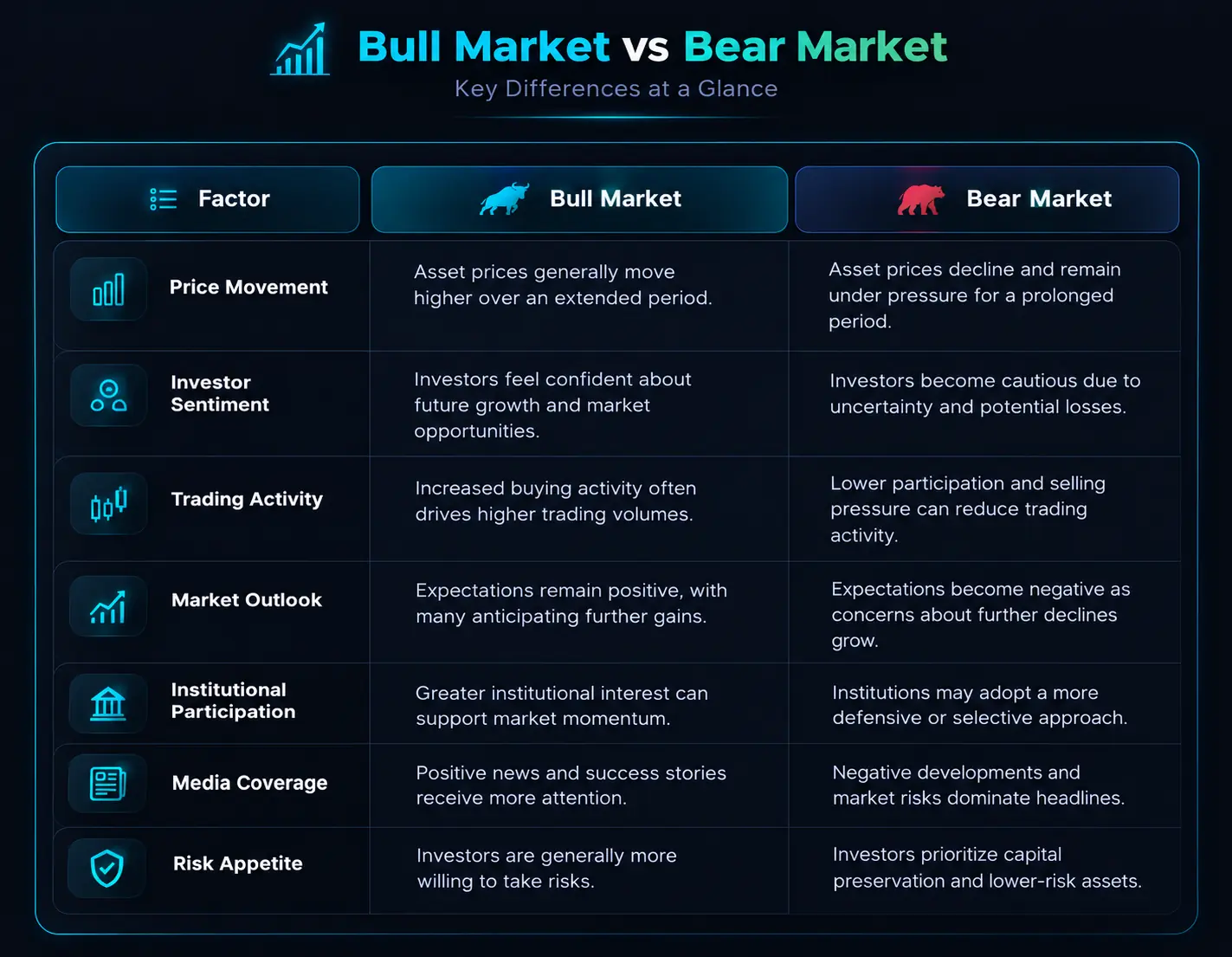
Recognizing these early signs can help investors stay prepared for changing market conditions. They can make more informed decisions throughout each stage of the crypto market cycle.
Smart Investors Navigate Market Cycles
One of the biggest mistakes investors make is assuming current market conditions will last forever. In reality, bull markets lose momentum, and bear markets eventually come to an end. Every market cycle goes through phases of growth, correction, recovery, and consolidation.Experienced investors know that emotional decisions can be costly. During bull markets, excitement often leads to unnecessary risks. During bear markets, fear can cause investors to sell strong assets at a loss.
Rather than trying to predict every market top or bottom, successful investors focus on long-term goals. They manage risk carefully, do their research, and avoid following market hype.
Understanding bull and bear market cycles can help investors stay focused, navigate volatility, and make better decisions in changing market conditions. Join the conversation on Crypto Network Forum to share insights, discuss market trends, and connect with a community of crypto enthusiasts and industry experts.
Frequently Asked Questions
Bullish and bearish are terms that refer to the general market expectations. Bullish means that the market participant expects an increase in prices, and bearish implies that they anticipate a decrease in prices. Knowing what bullish and bearish mean is essential to understanding market psychology and making accurate predictions.
In crypto, bullish means the expectation of a price rise of a certain asset, say Bitcoin or Ethereum. If you are bullish about a cryptocurrency, you are buying it in expectation of its price going up.
A bullish trend is a market situation where a financial instrument’s price is rising. The trend is characterized by a steady increase of an asset’s value, higher lows, higher highs, and increased volumes. In other words, a bullish trend in crypto or bullish bearish stocks means demand for the asset is growing.
There is no strict answer to this question as it may vary from case to case. A bull market can last a few months or several years – anything is possible. It is difficult to say exactly how long the market will be bullish because there are many factors that influence it, such as the economy, investor sentiment, institutional interest, and demand for the asset.
The phrase what the market bears means the amount or level at which investors are willing to buy something. In other words, what the market bears refers to the value investors assign to an asset. This phrase is used in finance to determine the market price of something.
It is of utmost importance to understand the difference between a bull and a bear market, as these things will help you perform better trades and be a more disciplined investor. Knowing the patterns of these market trends will prevent you from making rookie mistakes and help you profit from the market swings with less risk.