



























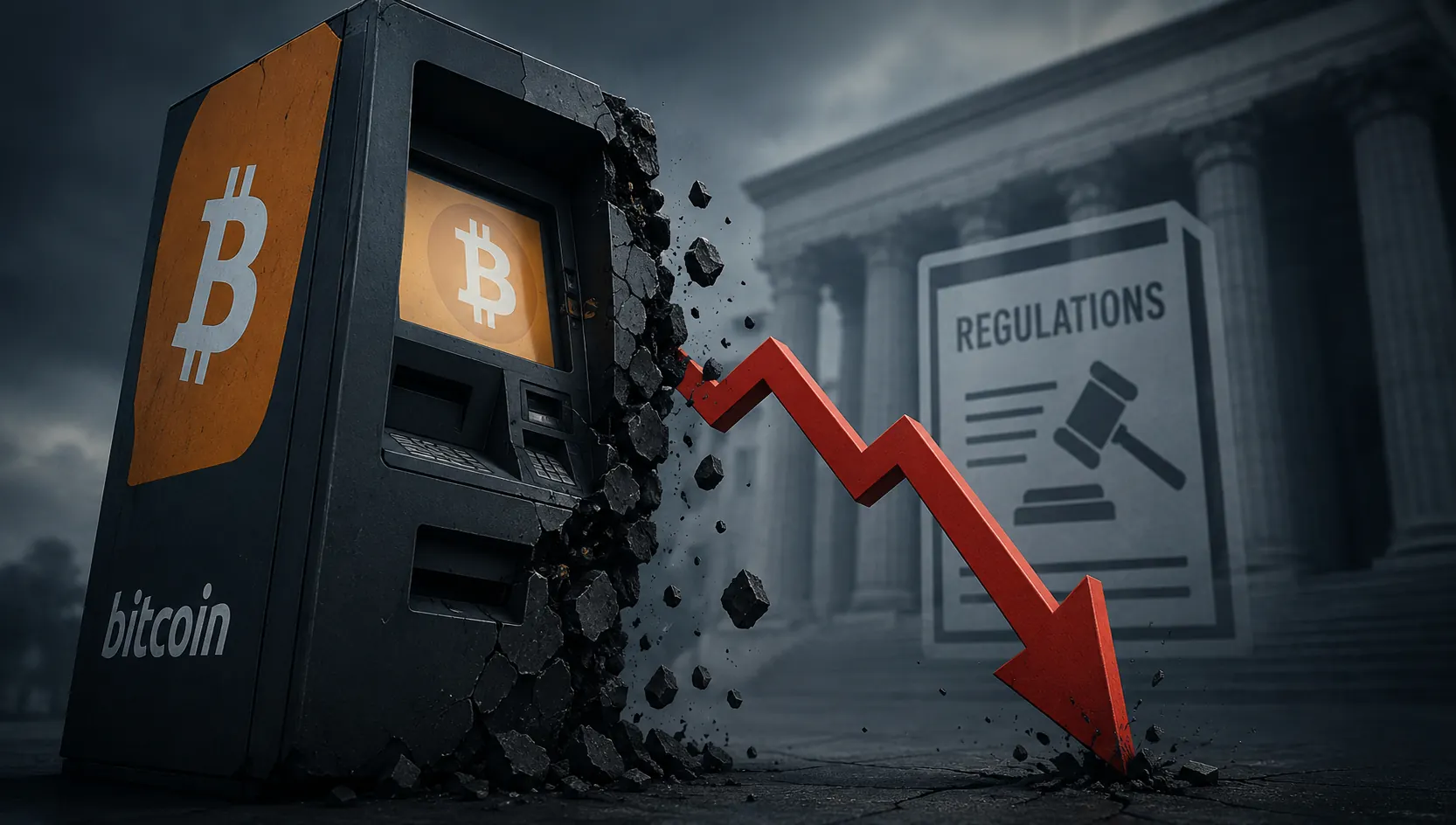
Bitcoin ATM Giant Files for Bankruptcy as Crypto Regulations Tighten
North America’s major Bitcoin ATM operators reportedly filed for bankruptcy, citing stricter regulations and rising legal costs linked to scams. The company’s CEO described the current Bitcoin ATM business model as unsustainable amid increasing government scrutiny and compliance requirements.
Bitcoin ATMs became popular over the past few years by allowing users to buy and sometimes sell cryptocurrencies using cash. However, regulators across the United States and Canada have intensified oversight after a surge in fraud cases.
Authorities claim scammers frequently direct victims, especially elderly individuals, to deposit money into Bitcoin ATMs under fake investment schemes, impersonation scams, or tech support fraud. The company reportedly struggled with mounting operational costs tied to anti-money laundering checks, identity verification systems, and legal compliance obligations.
Industry Growth Slows Down
The bankruptcy filing reflects broader troubles within the crypto ATM industry. While the number of machines globally expanded rapidly during the 2021 crypto boom. However, this growth has slowed significantly in recent years.
Data from crypto tracking platforms shows that several operators have started shutting down machines due to lower transaction volumes and stricter licensing frameworks.
The report also highlighted concerns that many Bitcoin ATM businesses relied heavily on high transaction fees. These fees sometimes exceeded 15%, which drew criticism from both regulators and consumers.
Crypto Industry Faces Regulatory Shift
U.S. regulators have recently increased enforcement actions targeting crypto kiosks suspected of enabling fraud or operating without proper registration. Several states have proposed tighter rules, including daily transaction limits, mandatory fraud warnings, and enhanced customer verification procedures.
Law enforcement agencies have also urged citizens to avoid sending money through Bitcoin ATMs when contacted by unknown individuals claiming to represent banks, government agencies, or investment firms.
The bankruptcy comes during a period of broader regulatory transformation across the digital asset industry. Governments worldwide are pushing for stronger oversight of exchanges, stablecoins, crypto payment services, and ATM operators.
Despite the setbacks, some analysts believe compliant crypto ATM networks could still survive by focusing on transparency, lower fees, and stricter consumer protection measures.
The development highlights how regulatory pressure is increasingly reshaping the crypto industry’s infrastructure, especially businesses that depend heavily on cash-based crypto transactions.