

























Bitcoin-USD Symbiosis Intensifies as Pressures on Token Supply Build
The cryptocurrency industry struggles with a problem of Structural change. Analysts point to the increased integration of Bitcoin into the US dollar's payment system.
Bitcoin and Dollar Stablecoins Have a Symbiotic Relationship
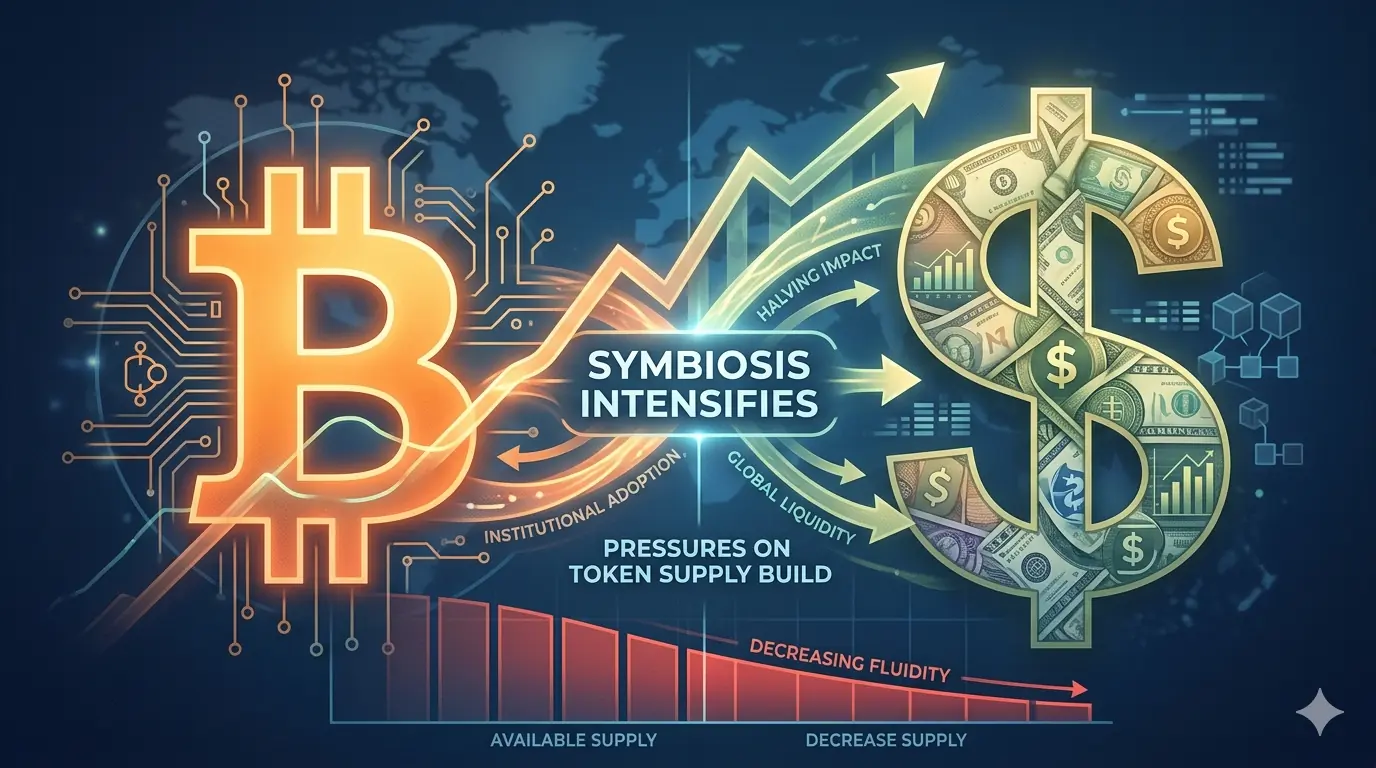
According to Sam Lyman, the head of research at the Bitcoin Policy Institute, the US dollar-pegged stablecoins and Bitcoin (BTC) are becoming a symbiotic relationship.
According to Lyman, Bitcoin is advantageous to the US financial system as the most frequently traded pair in the world is BTC/USD. These stablecoins are typically backed by cash deposits and short-term US government debt, which underscores the demand for dollar-based assets in the cryptocurrency markets.
He likened the dynamic to the 1970s petrodollar system, where oil sales around the world were valued in US dollars, which created structural demand in the currency. Likewise, dollar-based trading pairs' domination in the Bitcoin markets reinforces both the BTC and US dollar ecosystems' liquidity.
According to coinmarketcap data, the USD-linked pairs still represent most of Bitcoin trading, which indicates the strength of the connection.
Iran Telegram Ban Backfire
In the meantime, crypto-related technologies are still affected by regulatory tensions. Pavel Durov, the co-founder of Telegram, claimed that the government of Iran has backfired with its ban of the app.
Durov says that users resorted to the use of virtual private networks (VPN) and other circumvention measures to overcome restrictions. He said that a majority of the Iranian populace, over half, had downloaded Telegram irrespective of the ban, driving up what he called a digital resistance.
Proponents believe that decentralized and encrypted platforms and blockchain technology can offer alternatives to users who are becoming more surveilled and restricted on the Internet.
Market Implications
All these are signs of a growing yet tense crypto ecosystem. The adoption of Bitcoin by dollar-backed liquidity seems to strengthen its central position in international markets. As the industry faces its next stage of development, liquidity strength, real-world usefulness, and clear token economics are increasingly drawing the attention of investors.