



























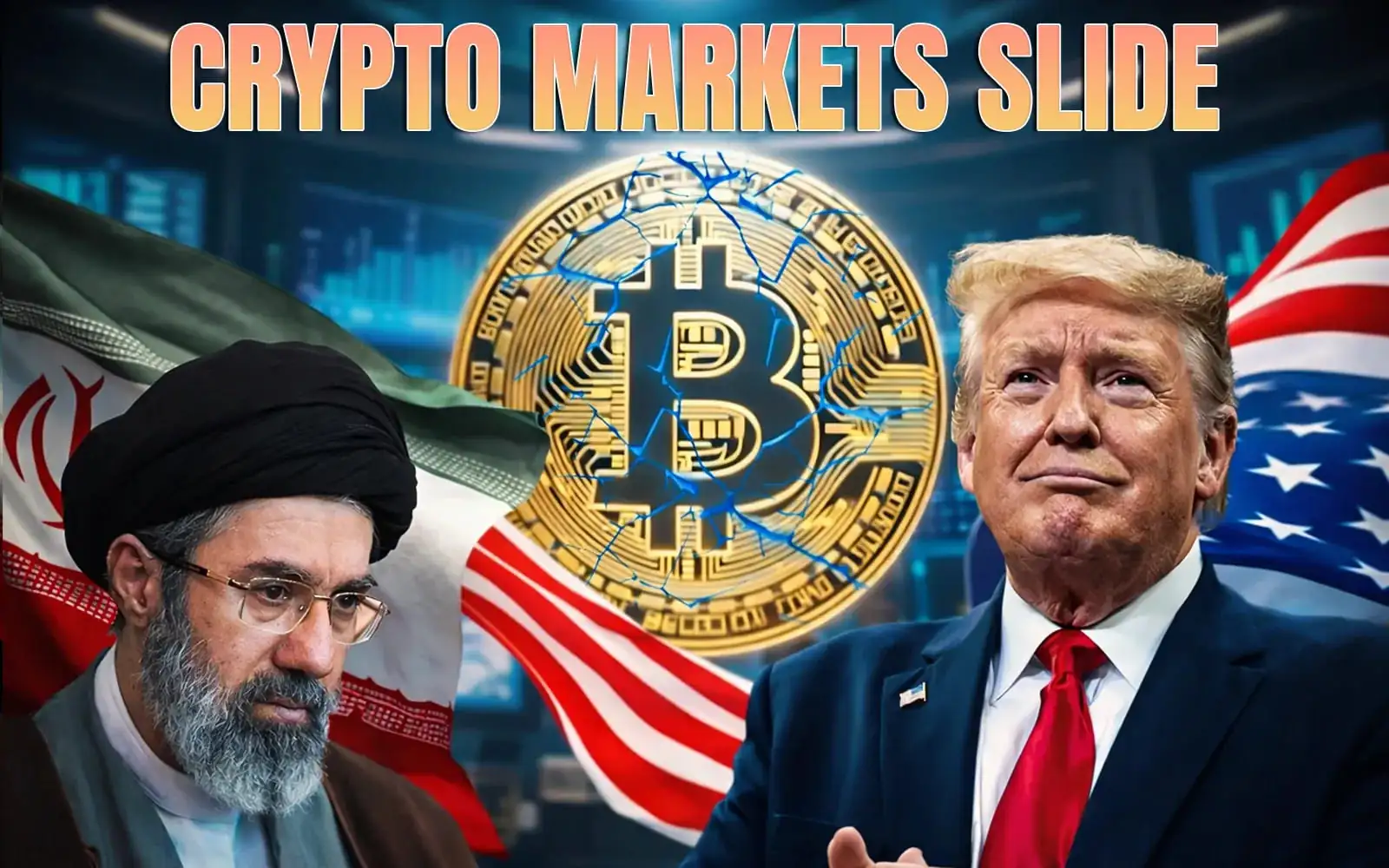
Crypto Markets Slide as U.S.–Iran Tensions Shake Investor Confidence
Cryptocurrency markets in the world were harshly pulled back as geopolitical tension peaked in investors’ confidence and the overall risk appetite. Bitcoin has dropped beneath the major necessary level of $69,000, at which many traders consider the level to be psychologically and technically significant. The action marked the start of fresh volatility in digital assets, which had been a fairly steady trading period up to that point. The other major tokens, such as Ethereum and XRP, also recorded significant losses, which was a wider backlash in the speculative markets.
The recession was preceded by escalating diplomatic and military conflict between the US and Iran. Stalled negotiations and increased rhetoric in the headlines added further uncertainty to the already sensitive global financial markets. The investors, having already been ploughing through ongoing inflation anxieties and varied economic information, reacted by shedding the more risky assets of cryptocurrencies. With the escalation of geopolitical tensions, the market was quite cautious in most quarters.
Unease in Traditional Markets
This uneasiness was reflected in traditional financial markets. Key equity indices such as the S&P 500 went up and down as traders evaluated what economic consequences further growth might have. There was a presence of volatility in energy prices as well, which indicated the apprehension of disruption in the supply of oil transportation channels. The effect of this is that, in these settings, capital is normally moved to lower-risk assets, decreasing the amount of investments held in instruments that are viewed as speculative or very vulnerable to global shocks. Although cryptocurrencies are decentralized, they have been acting more in accordance with larger risk markets in times of stress.
Trump’s Comments
President Donald Trump made comments to the public about the geopolitical situation, indicating the urgency of diplomatic achievements. Although some spheres of the crypto community have found Trump to be friendly to the growth of digital assets and regulatory transparency, his statements have also increased the sensitivity of the market to political cues. In the modern globalized business environment, even words of significant political leaders can rapidly impact the mood not only in equities but also in commodities and even in digital assets.
The episode highlights a more general change, like the operations of cryptocurrencies in global finance. After being advanced as assets that are mostly independent of conventional economic structures, digital currencies are now more strongly connected with macroeconomic forces, geopolitical risk and the psychology of investors. The involvement of institutions in crypto markets has risen dramatically in the past few years, and rises in the correlations among crypto assets and traditional financial standards. This leads to the fact that geopolitical shocks are no longer localized to conventional marketplaces, but they spill into crypto exchanges in real time.
This recent recession demonstrates how fast it is possible to change the mood when people are unsure about the situation around the globe. Although the long-term advocates still underline the trends of blockchain innovations and adoption, the short-term price action is still susceptible to external occurrences.
The fact that politics, economics and digital finance are coming to a converged point has become a reality and furthers the argument that cryptocurrencies do not act outside of the global financial system, but are within it.