



























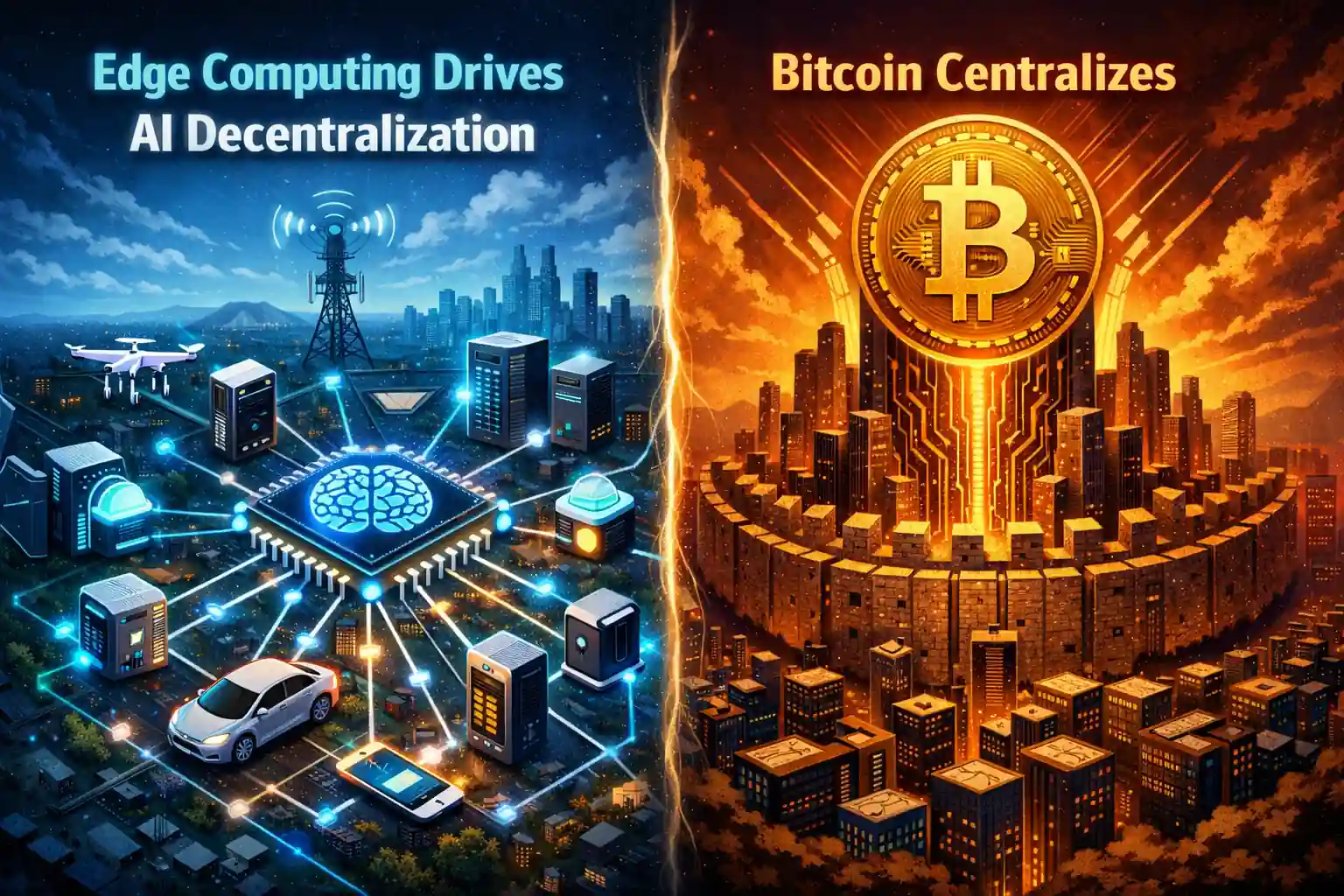
Edge Computing Drives AI Decentralization, Bitcoin Centralizes
Two opposing phenomena within the tech and crypto communities have sparked debate regarding technological developments. While decentralized artificial intelligence (AI) is gradually becoming a reality due to edge computing, Bitcoin mining is witnessing increasing centralization in terms of power.
Edge Computing Takes a Prominent Role in AI Design
The process involves moving data closer to where it is created, instead of sending it to distant data centers. This approach reduces delays and improves efficiency. The use of such technology can help increase processing speed, make operations more efficient, and enhance data privacy.
Experts from the industry note that the adoption of edge computing in AI technology can lessen the power of big tech corporations, which largely provide computing power for AI algorithms.
Decentralization Would Mean Increased Accessibility of AI
The increased use of distributed systems is expanding access to AI development. Smaller companies and institutions can now participate more easily. They no longer need to invest heavily in large infrastructure. This would mean independence from centralized services.
Experts point out that one day, decentralized AI systems might function in a way similar to blockchain networks.
Bitcoin Mining Moves Towards Centralization
On the contrary, Bitcoin mining is becoming increasingly centralized. It has turned into an activity that requires a lot of expensive equipment as well as substantial energy costs. Hence, regular individuals cannot afford mining anymore.
Because of that, mining operations and a few mining pools have taken control over a considerable part of the hashing capacity of the network.
Evidence of Increasing Centralization
According to recent findings, a small number of mining pools account for most of Bitcoin’s computing power. The industrialization of mining facilities has led to the dominance of a small number of operators, while the barriers to entry keep growing because of rising operational costs.
These developments have caused some alarm in the cryptocurrency world regarding the future of Bitcoin’s decentralized nature.
Security and Control Issues
It is argued that such centralization trends may pose certain dangers, including the risk of influencing transactions on the blockchain. However, a complete takeover scenario appears quite unlikely due to Bitcoin’s decentralized nature.
Regulatory issues may also become a problem if this trend continues because it will make Bitcoin even more centralized.
The paths of AI and Bitcoin mining are clearly moving in different directions. This shows how economic and technological factors can shape industries differently. Edge computing is creating new opportunities for decentralized AI networks. In contrast, Bitcoin mining is becoming increasingly concentrated. These two trends will definitely shape the future of these two fields.