



























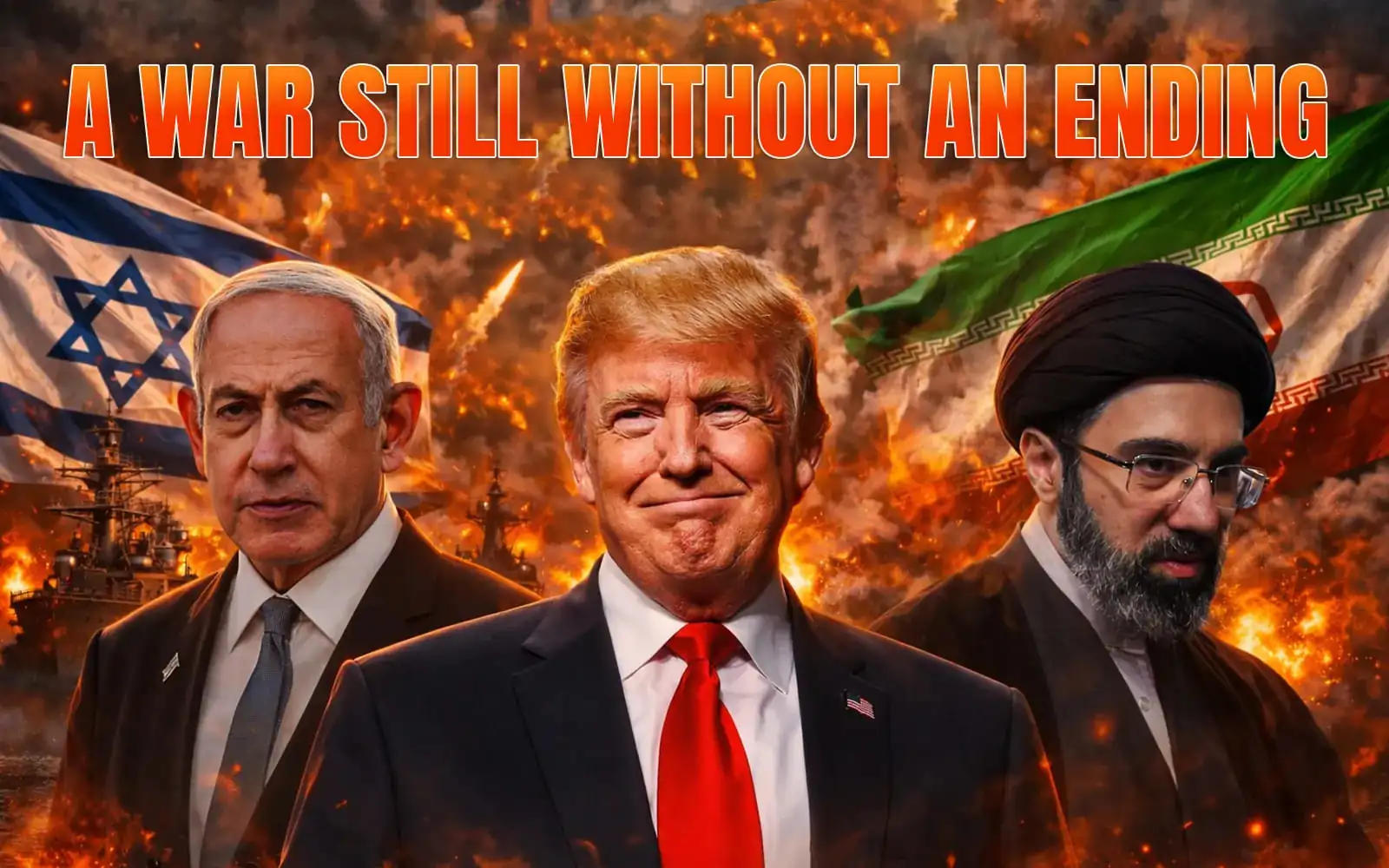
Iran–Israel Tensions: A War Still Without an Ending
By all appearances, the war is both over and very much on.
In a headline-grabbing statement, former U.S. President Donald Trump declared that “this war has been won.” He further reiterated claims that Tehran had indicated it would not pursue nuclear weapons development, which is a longstanding flashpoint in regional geopolitics.
It was a bold declaration. It was also premature. Because as markets briefly exhaled and oil prices dipped, missiles did not.
A Victory Without a Ceasefire?
Trump’s “war won” assertion appears rooted in tactical outcomes: airstrikes targeting Iranian military installations, cyber disruptions, and reported damage to logistical networks. Supporters describe it as strategic dominance. Critics call it narrative control.
The ground reality? There is no formal ceasefire. No jointly signed declaration. No verified cessation of hostilities.
Indeed, according to follow-up reporting, Trump simultaneously postponed further planned U.S. strikes on Iranian power plants for five days after what he described as “productive conversations” aimed at ending the fighting.
Wars rarely end with press statements. They end with agreements. And none has yet been inked.
Markets React, Then Reconsider
Amid the Iran-Israel war, for a moment, global markets behaved as if the curtain had fallen. Oil prices slid sharply. Equity markets stabilized. Risk sentiment improved. Traders love the word “won.”
But optimism proved fragile.
The Strait of Hormuz remains exposed. Energy infrastructure across the Gulf sits within striking distance. In other words, calm is conditional.
The Global Ripple Effect
Rising tensions between Iran, Israel, and the United States have placed the Middle East on high alert, with no formal ceasefire in sight. Roughly 20% of global oil consumption, about 17–20 million barrels per day, passes through the Strait of Hormuz, making any disruption immediately market-sensitive. Brent crude has seen swings of 5–10% within days during escalation headlines. Global oil prices remain volatile, impacting major importers such as India and China. Shipping insurance costs are rising, markets are fluctuating, and inflation concerns are resurfacing worldwide, underscoring how regional conflict quickly becomes a global economic challenge.
Energy-importing nations feel the tremors first. Among them: India.
The Major Impact on India
For India, the conflict is not abstract geopolitics. It is a fuel pump, a grocery bill, and a remittance transfer.
Immediate impacts have been visible:
-Higher crude prices feed into petrol, diesel, and LPG costs. 85–88% of its crude oil needs.
-Inflationary pressure on transport and essential goods
-Currency volatility as the rupee absorbs oil-linked stress. Every $10 oil rise can widen India’s current account deficit by ~0.3–0.4% of GDP.
-Investor caution across bond and equity markets.
India sources a substantial share of its energy imports via Gulf routes. Any sustained disruption around Hormuz carries an outsized risk.
The Illusion of Closure
There is something almost theatrical about declaring victory while active hostilities continue. Wars in the 21st century rarely conclude with clean endings. The absence of a ceasefire, combined with continued military posturing, suggests that while intensity may fluctuate, structural tensions remain unresolved.
Takeaway for the Investors
If there is one lesson markets relearn every few years, it is this: geopolitics does not obey quarterly earnings calendars.
Gold, historically a hedge in times of uncertainty, has already attracted renewed interest. But even gold rallies can overshoot on fear and retrace on diplomacy headlines.
Crypto markets, meanwhile, have behaved with their usual dual personality: sometimes risk-on, sometimes “digital haven,” often neither in a predictable way. In times of geopolitical instability, liquidity can evaporate quickly.
The prudent approach? Diversification. Liquidity buffers. Avoid over-leverage. Resist chasing narrative-driven spikes.
Because until there is a signed ceasefire, not just a confident sentence, the phrase “war won” remains more political than practical.
And in markets, practical realities eventually overrule rhetoric.
For now, the region watches. Diplomats talk. Missiles pause, then sometimes don’t.
Investors would do well to remember: uncertainty is not the same as opportunity. Sometimes, it is simply uncertainty.
Proceed accordingly.