



























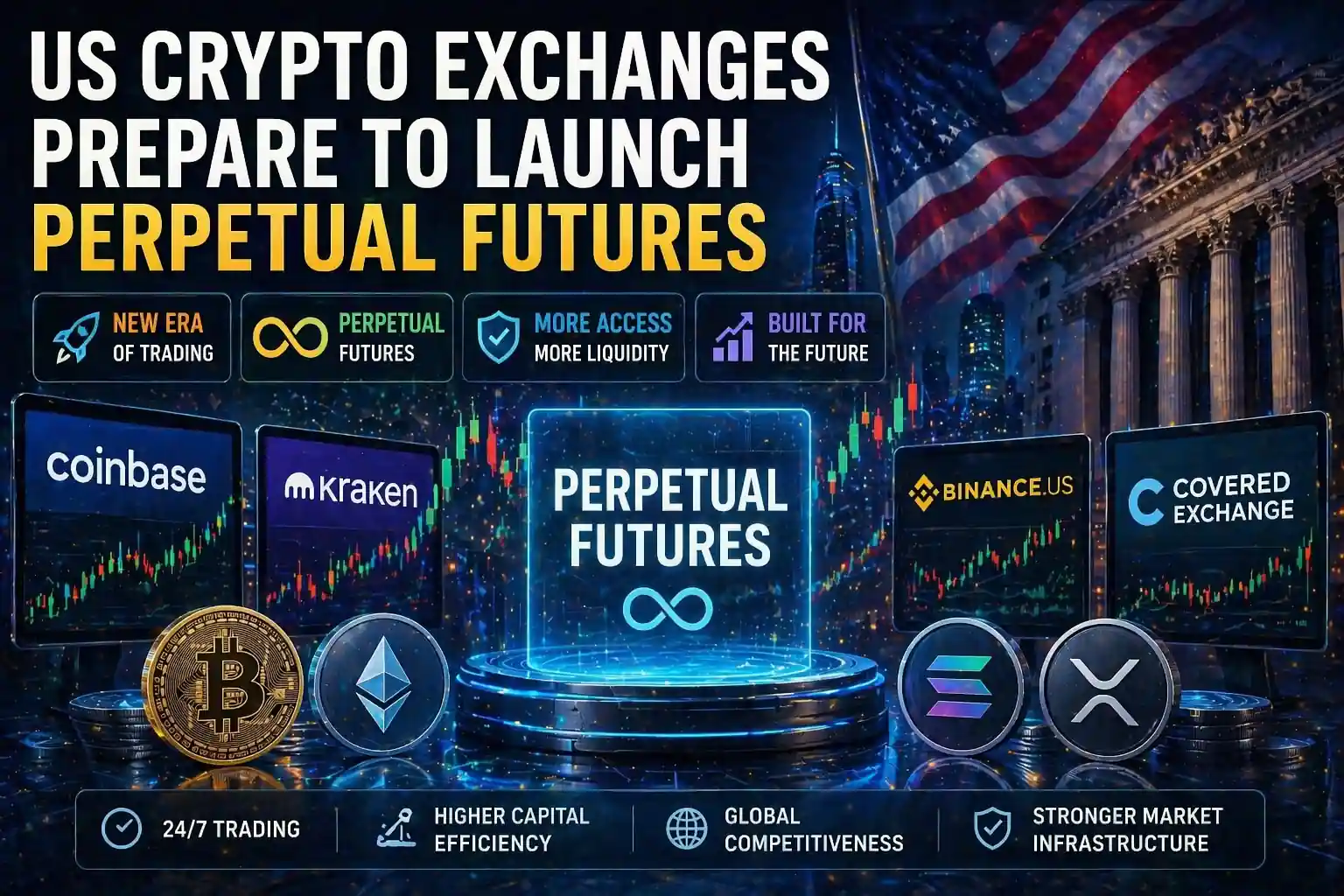
US Crypto Exchanges Prepare to Launch Perpetual Futures
The main cryptocurrency exchange platforms in the U.S. are gearing up to roll out their versions of perpetual futures contracts, the most lucrative and popular instruments in today's digital finance ecosystem.
This development follows recent signs of imminent CFTC regulation of crypto derivatives transactions.
A perpetual future is an instrument allowing speculators to bet on the prices of digital assets like BTC and ETH in the future without a fixed expiry date, as opposed to regular futures, which have expiration dates and need to be rolled over before expiry.
Across the globe, perpetual futures represent the majority of crypto derivatives trading; yet, in the U.S., retail users cannot access these instruments due to regulatory barriers.
Launching perpetual futures would enable U.S.-based exchanges, such as Coinbase and Kraken, along with any regulated platform, to secure an essential new revenue stream for themselves. The fees charged and volumes generated by derivatives trading exceed those of spot trading several times.
According to industry insiders' estimates, over 70 percent of crypto trading volume is attributable to derivatives markets, and perpetual futures constitute the lion's share thereof. Thus, exchanges in the U.S. will have been deprived of this significant portion of the market thus far, which went overseas.
Regulatory Shift Driving Momentum
According to Reuters, exchanges are speeding up their efforts since policy-makers are considering changes that would enable compliant perpetual futures instruments to be offered under US regulation.
The CFTC appears to be taking on more responsibility as the key regulatory body for derivatives of digital assets. Should any new regulations be enacted, exchanges might be allowed to trade such contracts within a controlled environment with mechanisms like margin requirements, risk warnings, position size limits, client safeguards, and market monitoring.
This could provide American investors access to instruments otherwise monopolized by foreign exchanges but still regulated by domestic laws.
Impact on Bitcoin and Crypto Markets
A successful launch could greatly contribute to the growth in activity within the country’s crypto exchange ecosystem. Market analysts have expressed their expectations that perpetual futures will boost Bitcoin and Ethereum trading volumes, improve liquidity on American exchanges, promote more institutional engagement, and help discover prices.
The innovation might also decrease the need for overseas trading platforms that take care of a considerable portion of the derivatives trade globally. This will be particularly relevant following the launch of Bitcoin spot ETFs that attracted billions of dollars in flows.
However, despite all the positive hype, regulators are quite cautious. Perpetual contracts are commonly leveraged products through which investors can increase their positions while investing relatively modest amounts of money. Although that allows traders to boost profits, this approach makes investors vulnerable during extreme market swings.
It has already been proven by past crypto bear markets that too much leverage could cause huge amounts of forced liquidation and extreme market volatility. That is why any upcoming regulatory approval of crypto futures would come only after strict compliance mechanisms were put into place.
Over the next few months, the future of the US crypto exchange sector will depend on regulatory decisions. In case these changes take place, exchanges will likely start offering perpetual futures trading to attract users away from foreign competitors.
As for Coinbase and Kraken, launching futures would allow them to diversify their revenue streams and enter another multibillion-dollar market segment.