

























On-Chain
October 1, 2026
· 👁 83 views
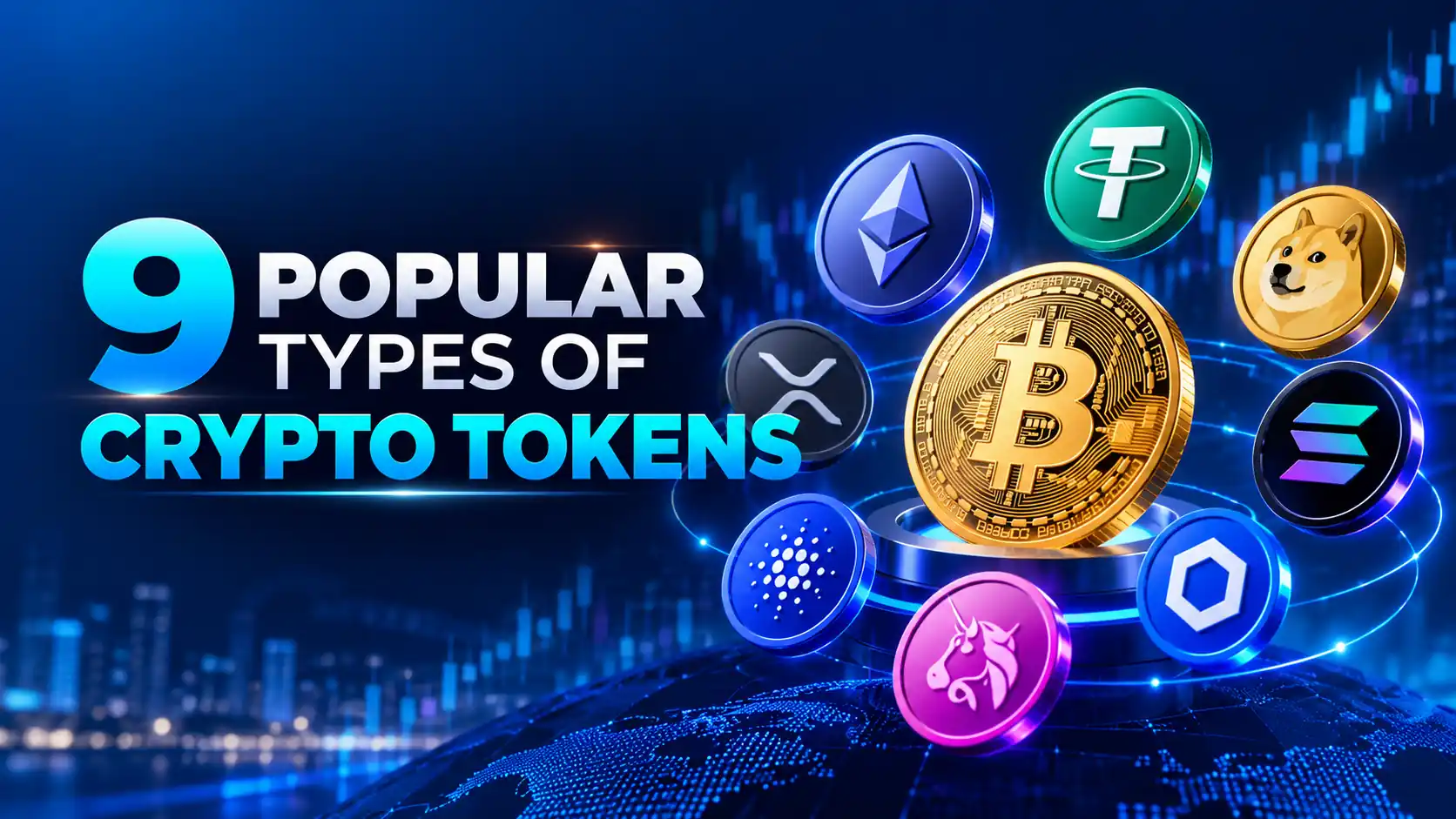
9 Popular Types of Crypto Tokens: Stablecoins, Meme Coins, Utility Tokens, and More
CR
Crypto Network Forum Blog
by @cryptonetworkforum · Oct 1, 2026
Crypto is not just about Bitcoin and big price moves. Behind the scenes, many tokens serve different purposes. Some act like digital dollars while others unlock services, support communities, or enable voting. Think of tokens as tools with different jobs.
There are various kinds of cryptocurrency tokens, each with a distinct function. While some track real-world assets, others provide utility. The cryptocurrency environment can be made simpler by understanding these token types.
What Are Crypto Tokens?
A crypto token is a digital unit of value that runs on top of an existing blockchain rather than having its own independent network.Digital assets stored on blockchains are called cryptocurrency tokens. They may stand for ownership, rights, access, or value. Not all tokens function in the same manner. The way each project designs them determines their purpose.
Tokens can be used for many different activities like facilitating decentralised trades or selling rare items in video games. But like any other cryptocurrency, they can be owned or traded.
9 Different Types Of Crypto Tokens
Every cryptocurrency token was made with a different intention. While some are utilised for payments, others offer governance, rewards, access, or the representation of both digital and physical assets. Understanding the various token kinds facilitates awareness of their function in the cryptocurrency market. Below are the different types of crypto tokens :1. Stablecoins
Stablecoins are tokens that are typically pegged to the value of a specific currency orcommodity. These are designed to offer stability in the volatile world of cryptocurrencies. It is linked to a reserve which makes it stable in nature. Like cryptocurrencies, these are also based on blockchain. It enables efficient digital payments for cross-border decentralized transactions.
Example :
Price of US Dollar = Price of USDT, as both are pegged.
Two popular stablecoins are USDT and USDC.
Both seek to keep their value close to $1.
There are 3 types of stablecoins. Crypto-backed, fiat-backed, and Algorithmic stablecoins.
-Crypto-backed stablecoins originate from DeFi applications and are backed by cryptocurrencies held as collateral.
-Fiat-backed stablecoins are backed by reserves of traditional fiat currencies such as USD or the Euro.
-Algorithmic stablecoins rely on algorithmic and incentive mechanisms to maintain their price stability. They may or may not be backed by anything.
According to CoinGecko, Stablecoins have a market capitalization of around $289 billion, making them the largest tracked crypto category.
2. Meme Coins
Meme coins are cryptocurrencies inspired by internet memes and pop culture references. They are all about fun, community, and internet humor. They are very volatile in nature. They often have very little utility. Their value often comes from dedicated media following on platforms like Twitter or Reddit.According to CoinGecko, the meme coin category is approximately $34 billion. Unlike Bitcoin or Ethereum, meme coins typically lack real-world application. Prices can skyrocket or crash within hours. The power of community and FOMO drives their popularity, but risks are always high. Popular examples include Dogecoin, Shiba Inu, and PEPE.
3. Utility Tokens
Utility tokens are vouchers or coupons uniquely created for promotional purposes. They do not give the holder any ownership stake over the company that issues it.When a company wants to start a new cryptocurrency project, they need to source capital. This can be accomplished through an Initial Coin Offering (ICO). ICO issues utility tokens that the public can buy in exchange for fiat currencies or other cryptocurrencies that the company will use to develop its project.
Utility tokens often have stable prices. Sometimes prices may fluctuate depending on the demand for the tokens. Utility tokens are coupons that give buyer access to future services or preferential treatment in some of the company’s services, however access to future value is not always guaranteed.
These tokens are mainly based on speculation. These are not considered investments. They cannot yield profits like other cryptocurrencies. Utility tokens are unregulated.
The primary purpose of these tokens is to help startups generate the capital to complete a project. It also allows them to generate interest in their products and value in their blockchain ecosystem services. Once the project is complete the utility token holder can use it to redeem a particular service of the company that issues it. Popular examples include LINK, FIL, BAT.
4. Governance Tokens
Governance tokens are cryptocurrencies that represent voting power on a blockchain project. They represent the main utility token of DeFi protocols as they distribute powers and rights to users through tokens.In the decentralized world of blockchain, projects are often looking for ways to distribute a greater amount of power and responsibility to their users. But in order for that to work, they need to employ a method that guarantees only users who are seriously committed to the success of the project.
One way to achieve this is by creating a special type of collectively managed organisation known as a Decentralised Autonomous Organisation (DAO).
These DAOs require participants to invest their own money in exchange for voting power to ensure they all act honestly and the DAO prevails. Usually under this setup, those who invest more money have greater voting power over those who do not. Examples are UNI, AAVE, MKR.
5. Security Tokens
Security tokens are digital representations of various assets that are issued, stored, and traded on the blockchain. These can be fixed income, real estate, commodities and investment fund shares.The word security means that tokens are regulated by bodies that are held responsible for determining how tokens should be issued, managed, and exchanged.
Security tokens are traded on specialized token exchanges. These exchanges are required to conduct thorough investigations into token listing as well as multiple investors on boarding procedures.
Security token Offerings (STO) are about issuing digital tokens on blockchain in the form of regulated securities. STOs are viewed as a highly safe and convenient way of raising funds for a project as well as making a public offering of the company’s shares.
6. Payment Tokens
Digital assets used for value transfers are called payment tokens. They enable direct money transfers between users. Traditional payment intermediaries are not necessary for these transactions to take place.Among the most well-known payment tokens is Bitcoin. Another cryptocurrency intended for online transactions is Litecoin. Both can be moved between cryptocurrency wallets that are compatible.
Cross-border value transfers can be effectively supported through payment tokens.Users don't need to rely on conventional banks to send money. The network architecture of each blockchain determines how transactions are processed.
Payment tokens can be used for a number of things. These include digital money transfers, payments, and receipts. Depending on market demand, their values can fluctuate dramatically.
7. Asset-Backed Tokens
Asset-backed coins connect digital assets and real-world assets. They stand for value associated with tangible or monetary possessions. Gold, real estate, commodities, and bonds are examples of these assets.A certain underlying asset can be represented by each token. One token might stand for gold that has been stored, for instance. The physical asset is often held safely by a trustworthy custodian.
Traditional assets can become digitally accessible due to these tokens. Additionally, they can facilitate the transfer of ownership interests. Transparent transaction and ownership information can be obtained from blockchain records.
Asset-backed tokens provide blockchains actual value. They can facilitate easier asset trading and digital ownership. In general, their value is determined by the value of the underlying asset.
8. Exchange Tokens
Digital assets connected to cryptocurrency exchanges are called exchange tokens. Within exchange ecosystems, they benefit users. Discounts on trading fees are one of these advantages.Tokens are used by several exchanges to promote platform engagement. When paying fees using tokens, users might be eligible for discounts. Rewards, promotions, and platform access are examples of additional advantages.
One well-known example of an exchange token is BNB. It facilitates a number of Binance ecosystem activities. Its applications have grown beyond the benefits of simple exchange.
9. Non-Fungible Tokens
Non-fungible tokens represent unique digital goods on blockchains. Each NFT has a distinct ownership history and identity.NFTs can be used to represent collectibles, music, artwork, videos, and more. They could also represent tickets, subscriptions, or virtual property.
According to DappRadar, in Q3 2025, 18.1 million NFTs were sold, resulting in a trading volume of almost $1.6 billion. Unlike conventional cryptocurrencies, NFTs are not transferable assets. Rarity, demand, uniqueness, and utility all influence their value. NFT ownership is publicly recorded on blockchain networks. This document helps with ownership and transaction history verification.
Understanding the various crypto tokens can help users make wise decisions. It is also easier to keep up with the evolving cryptocurrency industry when you stay informed. The Crypto Network Forum is a forum where cryptocurrency enthusiasts may exchange ideas, talk about token trends, and gain knowledge from one another. Participate in the discussion to maintain contact with the larger cryptocurrency community.
How Are These Tokens Different
Cryptocurrency tokens have various purposes even though they look the same. Some promote payments, while others provide particular benefits. Understanding these differences makes it easier to understand cryptocurrencies. It also helps determine the advantages that each token offers. Below is a table that highlights key differences:-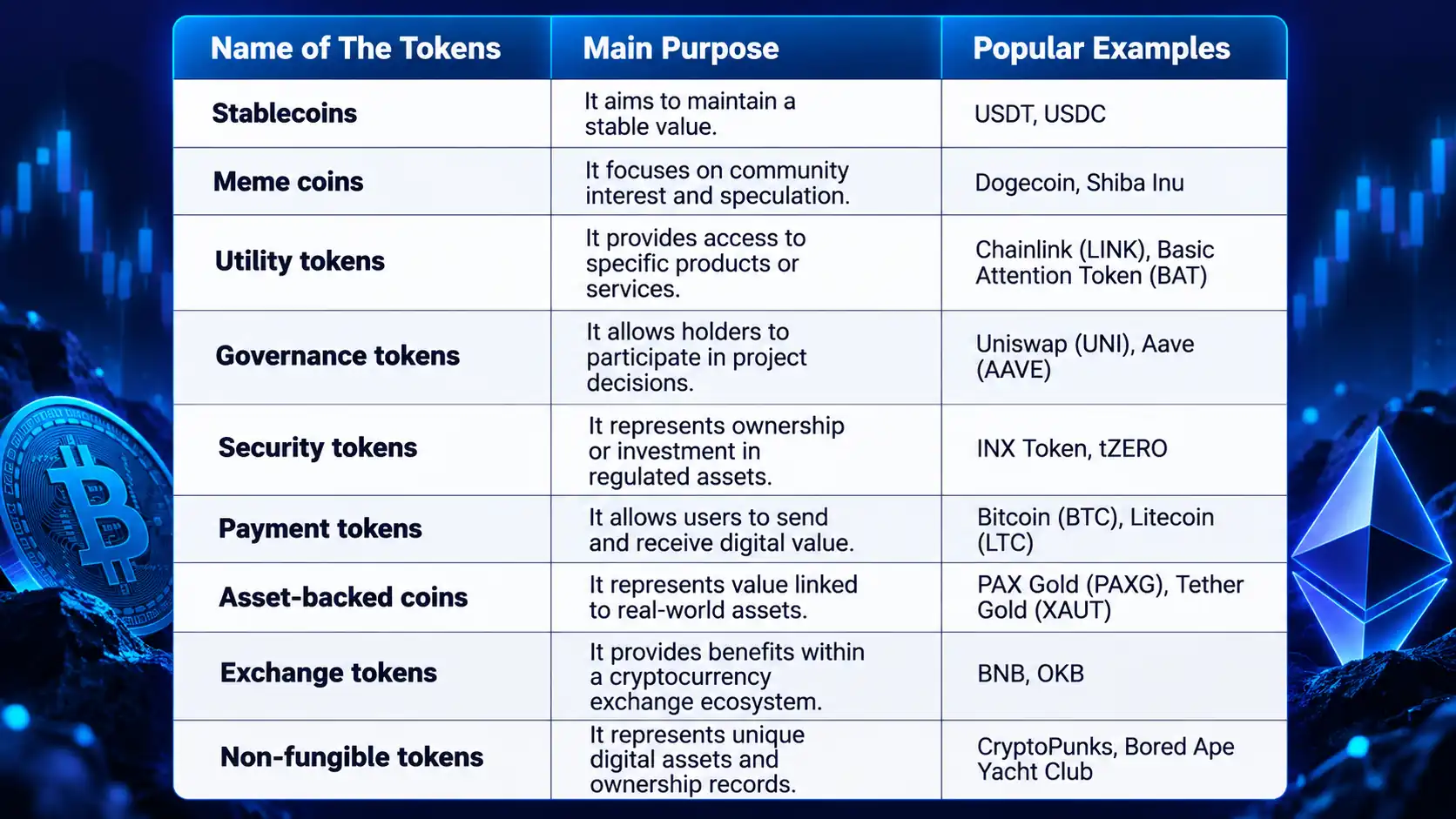
Every token category offers something different. Their practical applications are still growing in a variety of industries. It is easier to understand the expanding token ecosystem when you are aware of them.
Understanding Token Types Simplifies Crypto
The cryptocurrency market is still being shaped in tokens. Their increasing use opens up new business prospects in a variety of industries. Certain tokens are starting to appear in regular digital interactions. As a result, the token market is becoming more dynamic and varied.Each token may have a different value. While some tokens are more risky, others prioritise stability. Users are able to compare tokens when they are aware of their purpose. Better research is also encouraged before making financial decisions.
As new uses for the cryptocurrency market are constantly evolving. It is sometimes difficult and confusing to understand these developments. Share your thoughts on the Crypto Network Forum, where enthusiasts share their expertise and experiences. Express your opinions about token movements, cryptocurrency prices, and market developments.
Frequently Asked Questions
The most common types of crypto tokens are stablecoins, meme coins, utility tokens, governance tokens, security tokens, payment tokens,exchange tokens, NFTs and asset-backed coins.
Tokens frequently make use of pre-existing blockchain networks, whereas coins typically function on their own blockchains.
Their popularity is influenced by public attention, online communities, and social media trends.
Yes, certain tokens have multiple uses inside their respective ecosystems. Payments, voting, prizes, and service access are some of their possible purposes.
Demand, supply, utility, scarcity, and market sentiment can all affect a token's value. Value drivers can vary depending on the type of token.