




















Coin History
September 23, 2026
· 👁 114 views
Ripple and XRP Explained: Understanding the Company and the Token
CR
Crypto Network Forum Blog
by @cryptonetworkforum · Sep 23, 2026
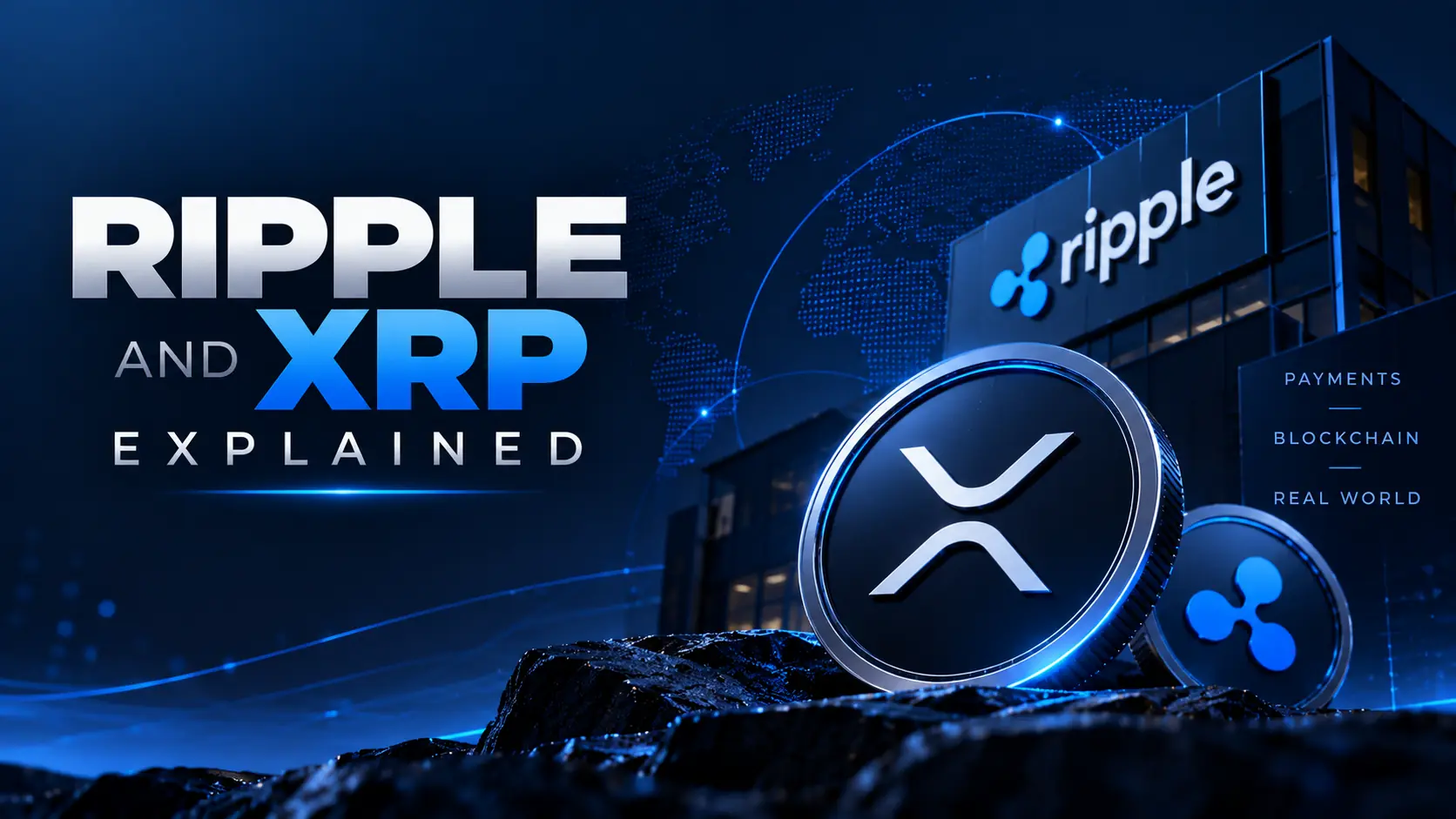
Ripple and XRP are often mentioned together. Yet they are not the same thing. Ripple is a technology company, and XRP is a digital asset. The XRP Ledger is the blockchain that supports XRP and other digital assets. Understanding this distinction makes the broader ecosystem much easier to follow.
What Is Ripple?
Ripple is a financial technology company that develops blockchain-based infrastructure for payments and other financial services. Its products are designed mainly for banks, fintech companies, payment providers, and other financial institutions.Ripple's payment solutions can use digital assets such as XRP and RLUSD to move value across borders. The goal is to reduce delays and friction in international payments. Ripple does not own the XRP Ledger. The ledger is open-source and operates through a network of independent validators. Ripple is one of the companies that contributes to its development.
This is an important point in any Ripple and XRP explained guide: Ripple and XRP are connected, but they are separate entities.
What Is XRP?
XRP is the native digital asset of the XRP Ledger. It was designed with payments and value transfer in mind. Unlike a company share, XRP does not represent ownership in Ripple. It operates on the XRP Ledger and can be transferred between accounts without requiring a central intermediary.XRP can also serve as a bridge asset between different currencies. For example, a payment moving between two currencies could use XRP as an intermediate asset. This can help reduce the need for accounts holding liquidity in multiple currencies.
What Is XRP Used For?
The main uses of XRP include:Payments: XRP can be transferred directly between XRP Ledger accounts.
Bridge liquidity: It can connect different currencies through the ledger's decentralized exchange.
Transaction fees: XRP is used to pay transaction costs on the XRP Ledger.
Network protection: Small transaction costs help prevent spam on the network.
Liquidity: Financial applications can use XRP to move value between markets.
These uses explain why XRP is more than simply an asset traded on crypto exchanges. Its design is closely linked to the movement of value, which also shapes how an XRP strategy may be considered within the broader crypto ecosystem.
How Does XRP Work?
XRP works through the XRP Ledger rather than through traditional mining. When a transaction is submitted, validators on the network check whether it follows the ledger's rules. Validators then compare their proposed transaction sets. Once the required agreement is reached, the transaction becomes part of the validated ledger.The XRP Ledger can reach consensus within seconds. It does not use Bitcoin's proof-of-work mining model or Ethereum's proof-of-stake model. This design allows XRP transactions to settle quickly while keeping the network distributed.
What Is the XRP Ledger?
The XRP Ledger (XRPL) is an open-source, decentralized Layer 1 blockchain. It records XRP transactions and supports other assets and financial applications. Think of XRPL as the network, XRP as its native asset, and Ripple as a company building financial solutions with blockchain technology.The XRP Ledger records balances and transactions. It also supports a decentralized exchange. Independent servers and validators help maintain the network. XRPL supports more than XRP. It also enables tokenized assets, decentralized trading, and other financial applications.
How Does Ripple Use XRP?
Ripple can use XRP as part of its payment infrastructure. In cross-border transactions, XRP can act as a bridge between currencies. A person sends money in one currency. That value can be converted into XRP or another digital asset. The asset is then transferred through the XRP Ledger. At the other end, it can be converted into the recipient’s local currency.The exact process depends on the payment route and product being used. Ripple's current payment infrastructure can also use stablecoins such as RLUSD.
This distinction matters because Ripple does not need to use XRP for every transaction or every product. XRP is one digital asset within a wider financial technology ecosystem.
Ripple, XRP, and XRPL: The Simple Difference
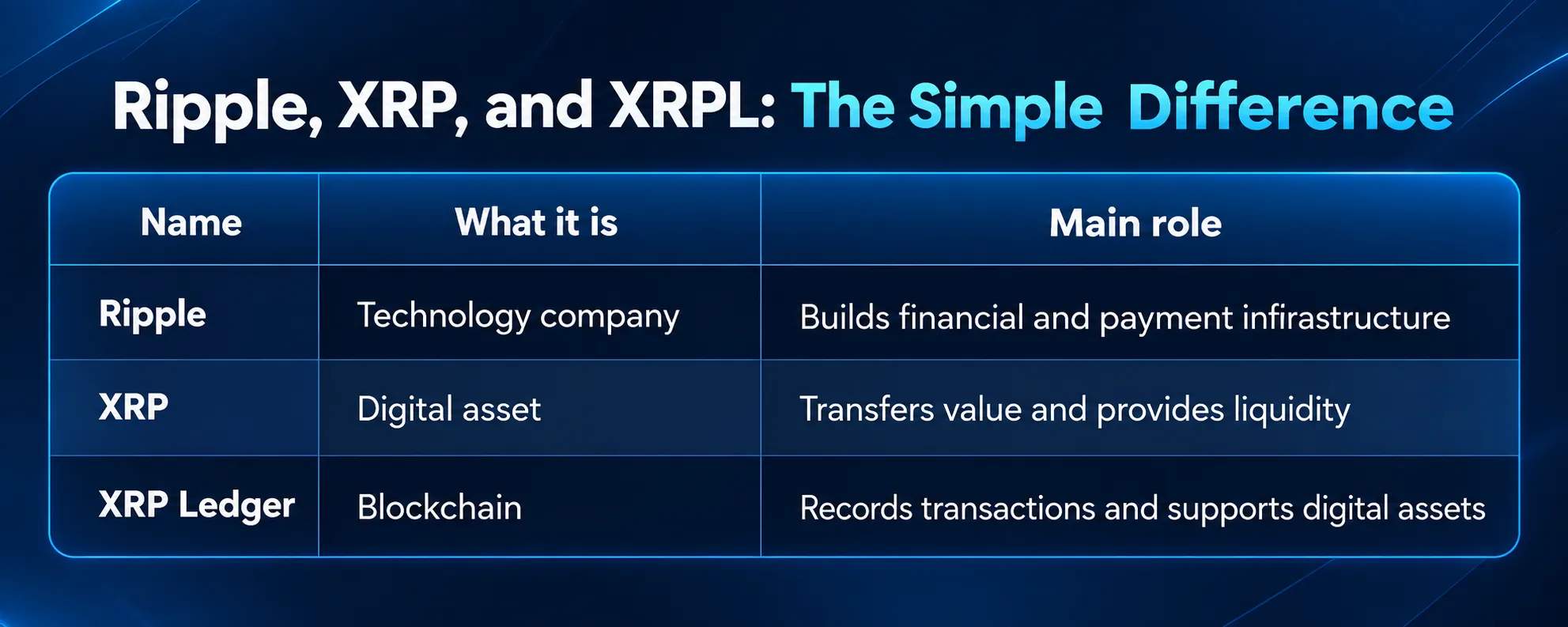
Keeping these three concepts separate makes the XRP ecosystem easier to understand. For investors and newcomers, technology is only one part of crypto research. Market discussions, community views, regulations, and educational content also add context. Crypto Network Forum is a community-focused platform for crypto discussions, research, guides, and market perspectives. It helps readers explore different views and stay informed.
Ripple vs XRP: Two Different Roles, One Ecosystem
Ripple and XRP are closely connected, but they serve different purposes. The XRP ecosystem is also expanding beyond simple value transfers. The XRP Ledger supports tokenized assets, decentralized trading, and other financial applications. This makes XRP worth studying as both a crypto asset and part of a wider blockchain ecosystem.Understanding the basics is a good starting point. From there, topics like XRPL technology, cross-border payments, tokenization, regulation, and market activity become easier to explore.
Want to explore more crypto topics and different perspectives? Join the conversation on Crypto Network Forum and see what the community is discussing.
Frequently Asked Questions
XRP is used to transfer value on the XRP Ledger. It can also serve as a bridge asset between different currencies and help provide liquidity for cross-border payments.
XRP works through the XRP Ledger, where transactions are verified through a consensus process. This allows transactions to be confirmed quickly without traditional crypto mining.
Ripple can use XRP within its payment solutions as a bridge asset for moving value between different currencies. However, Ripple's products do not require XRP for every transaction.
The XRP Ledger is a decentralized, open-source blockchain. It supports XRP and provides features such as payments, tokenized assets, and decentralized trading.
No. Ripple is a technology company, while XRP is a digital asset. The XRP Ledger is the blockchain network on which XRP operates.