



























FinThreats
August 24, 2026
· 👁 175 views
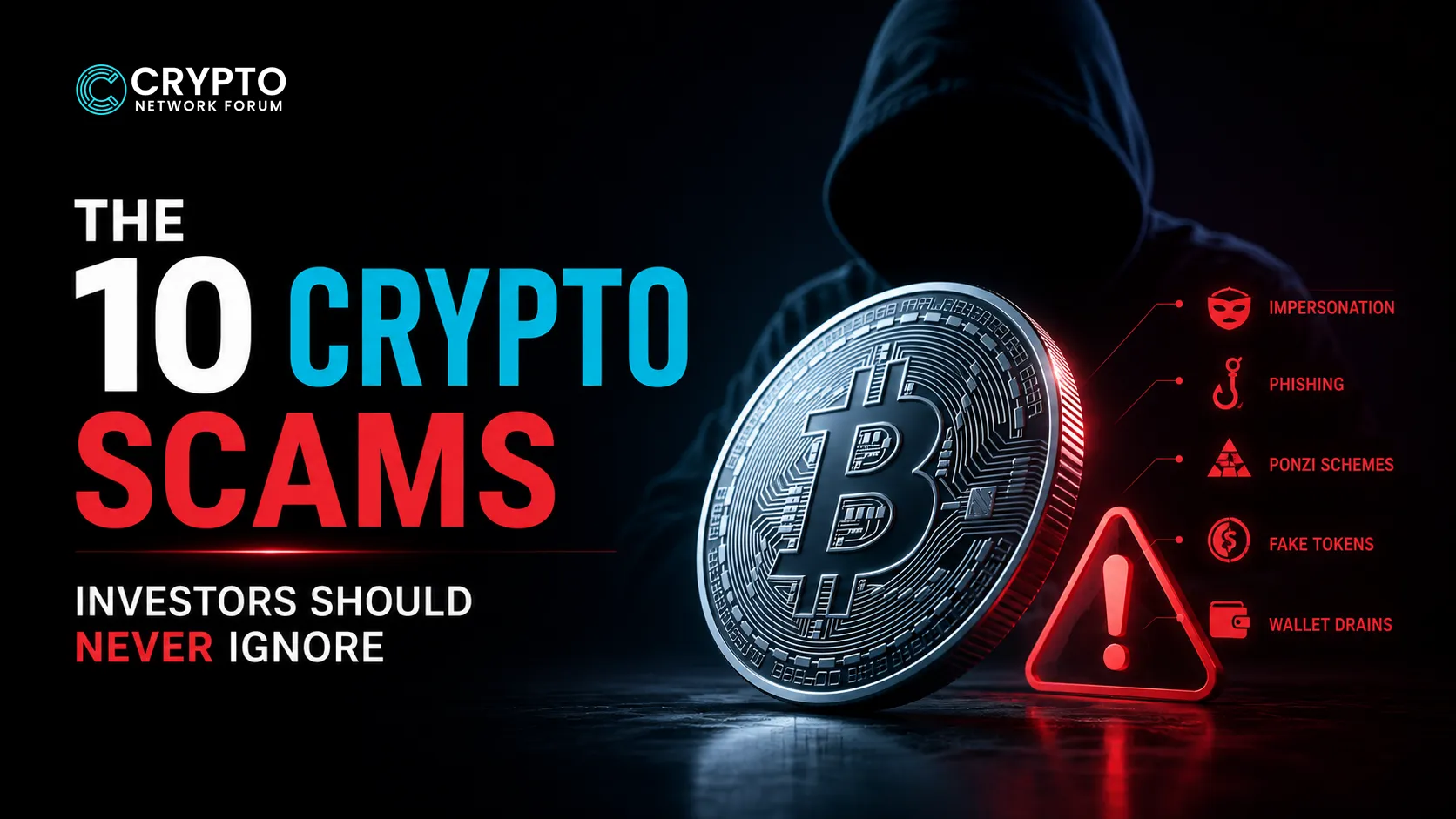
The 10 Crypto Scams Investors Should Never Ignore
CR
Crypto Network Forum Blog
by @cryptonetworkforum · Aug 24, 2026
Crypto can create wealth, but it also creates opportunities for scammers. A single click, transfer, or rushed decision can put digital assets at risk.
It might start with a DM from an unknown “investor” promising guaranteed returns. A website claims your crypto can grow 10x. A new token appears to have a celebrity’s backing. At first, these opportunities may look exciting. But behind the promise of easy profits could be a carefully designed scam.
This article will cover the most common cryptocurrency frauds. It will also explain how cryptocurrency fraud works and measures to recognise it.
What are Cryptocurrency Frauds?
Scams aimed at stealing your cryptocurrency or access to your digital assets are referred to as cryptocurrency fraud.Fraud involves misleading information, in contrast to a typical investment loss brought on by market fluctuations. To get your money or information, someone might act as an investor, exchange agent, celebrity, friend, romantic partner, or even a government official.
According to Chainalysis, global losses from cryptocurrency fraud and scams were estimated to reach $17 billion in 2025. This shows the increasing scope of cryptocurrency fraud and the necessity of raising user knowledge.
How Cryptocurrency Fraud Works
Cryptocurrency fraud takes place when scammers trick victims through cryptocurrency wallets, exchanges, tokens, or blockchain transactions. They may establish crypto businesses, guarantee earnings, or request users to provide wallet details or cryptocurrency payments.Once cryptocurrency has been moved to a scammer's wallet, it may be difficult to retrieve it because blockchain transactions are usually irreversible. Customers should verify cryptocurrency platforms and never share their private keys or seed phrases. People should investigate crypto projects carefully.
10 Most Common Types of Cryptocurrency Frauds
Crypto scams can take many forms. The most common types of cryptocurrency fraud are given below :1. Pig Butchering Scams
It begins with a conversation rather than a request for cryptocurrency. Scammers communicate with victims via social media, dating websites, Telegram, WhatsApp, and random messages. They build trust before making a seemingly profitable cryptocurrency investment. Trading platforms that show great but fake earnings are used to scam victims. When victims try to withdraw, scammers demand additional taxes or fees. Both the connection and the investing platform are fake in this scam.2. Fake Crypto Investment Scams
Promises of guaranteed returns, quick profits, or AI-powered trading are used by fake crypto investment scams to attract potential victims. Scammers present profits that might not be real by using well-designed websites, fake testimonials, and made-up dashboards. Victims frequently experience limitations or extra costs while attempting to withdraw their money.3. Crypto Phishing Scams
One click can cost you the loss of your digital asset. Crypto phishing scams use fake emails and websites that copy real cryptocurrency exchanges or wallets to steal your passwords and other secret information. Before providing your information, always review the website and be cautious when clicking on unfamiliar links.4. Crypto Recovery Scams
Cryptocurrency recovery scams target people who have already lost money due to fraud. Scammers pretend to be officials, lawyers, or recovery agents and promise to recover the stolen cryptocurrency for a price. They may request additional cryptocurrency or upfront payments, but the recovery never happens.5. Crypto Impersonation Scams
These scams involve pretending to be trusted contacts like an exchange representative, government official, celebrity, or business representative. They may ask you to move your cryptocurrencies or reveal security codes or personal information. The use of deepfakes and artificial voices makes these scams even harder to detect.6. Rug Pulls
When scammers promote a new cryptocurrency project, generate excitement about its token, and draw investors as the price increases, this is known as a rug pull. The developers may simply disappear, remove liquidity, or empty the funds once sufficient money has been received, leaving investors with tokens that are worth very little or nothing.7. Crypto Romance Scams
Scammers utilize social media or dating apps to establish fake emotional relationships as the initial stage in crypto romance scams. Once trust has been established, they offer a cryptocurrency investment and convince the victim to make an investment. Because of the emotional link, the investment request might seem believable.8. Fake Exchanges and Wallets
Not every cryptocurrency platform you come across online is trustworthy. Scammers are able to produce websites and applications that closely resemble authentic wallets or exchanges. You might be able to open an account, make deposits, and even check your balance. When you attempt to withdraw, the issue arises. There is a tax all of a sudden. A processing charge comes next. Next, a second payment for verification. There is no technological issue keeping your money stranded. The fraud might be the platform itself.9. Pump-and-Dump Schemes
All of a sudden, a token is the most popular topic on the internet. It appears that everyone is buying it. There are numerous predictions on social media that its price is going to rise. In order to generate fake demand, scammers or insiders push a token. They sell their holdings as the price increases. Other investors suffer losses when the price crashes.10. Fake Crypto Giveaways
Scammers promote fake offers while acting as well-known figures, influencers, cryptocurrency companies, or celebrities. They promise to repay a higher amount if you send them cryptocurrency first. These promises are fake, and you lose your crypto in this fraud.While each cryptocurrency scam employs a unique approach, they all seek to gain your trust in order to steal your money or personal information. Knowing these facts will help you make safer decisions.
How to Protect Yourself From Crypto Frauds?
Most cryptocurrency scams employ a planned strategy to comfort victims before taking advantage of them. Usually, the process includes these stages:Examine before investing — Before investing, do your homework and familiarize yourself with the cryptocurrency project, team, and platform. Research is very important before investing. Understanding everything in detail will help to protect yourself from unnecessary scams.
Make use of reliable platforms — Select trustworthy and validated cryptocurrency wallets and exchanges. Before making a deposit or connecting your wallet, verify their authenticity, reputation, and security features.
Private keys should never be shared — keep your seed phrases and private keys fully confidential. Never provide these to anyone, even if anyone says that they are from a wallet or cryptocurrency exchange. Your cryptocurrency assets could be accessible to anyone with these details.
Be cautious of guaranteed returns — promises of fast or assured cryptocurrency earnings are serious warning signs. Prices of cryptocurrencies can fluctuate greatly, and no respectable investment will ensure profits. Anyone offering rapid, assured, or very large cryptocurrency returns should be avoided.
Check accounts and links - Before accessing cryptocurrency websites, social media accounts, and wallet URLs, carefully check them. Scammers frequently make fake accounts and websites that mimic real cryptocurrency platforms.
Avoid making quick decisions — don't let urgency or pressure affect your cryptocurrency choices. To get individuals to respond quickly, scammers frequently create fear of missing out (FOMO). Before investing in cryptocurrency, take some time to confirm the offer, project, or transaction.
Cryptocurrency fraud is becoming more common. Understanding how scams work could help you stay secure. Cryptocurrency users can discuss problems, share their experiences, and exchange useful information on the Crypto Network Forum. Take part in the discussion to learn from others and stay up to date on cryptocurrency scams.
Stay Safe from Crypto Scams
Before completing any crypto transaction, always double-check the person or platform, take your time, safeguard your wallet details, and don't send money based on promises.By being aware of warning indicators, such as claims of huge returns, pressure to act immediately, accessing questionable websites, or requests for personal information, you can avoid falling victim to cryptocurrency frauds.
It can be challenging to identify cryptocurrency scams, particularly when they appear to be reputable companies or genuine investment opportunities. Share your thoughts on cryptocurrency frauds and scam awareness on the Crypto Network Forum.
Frequently Asked Questions
It means stealing cryptocurrency or personal data by establishing relations with the victims.
Scammers fool people by establishing trustworthy relations and showing fake profits. They steal their cryptocurrency or personal information.
Demands for urgent payments, unknown websites, and promises of returns are all red flags.
Being aware, verifying platforms, staying away from false claims, and protecting your financial information can save you from fraud.
Yes, the scam can be reported to law enforcement, government websites, or cybercrime authorities.