



























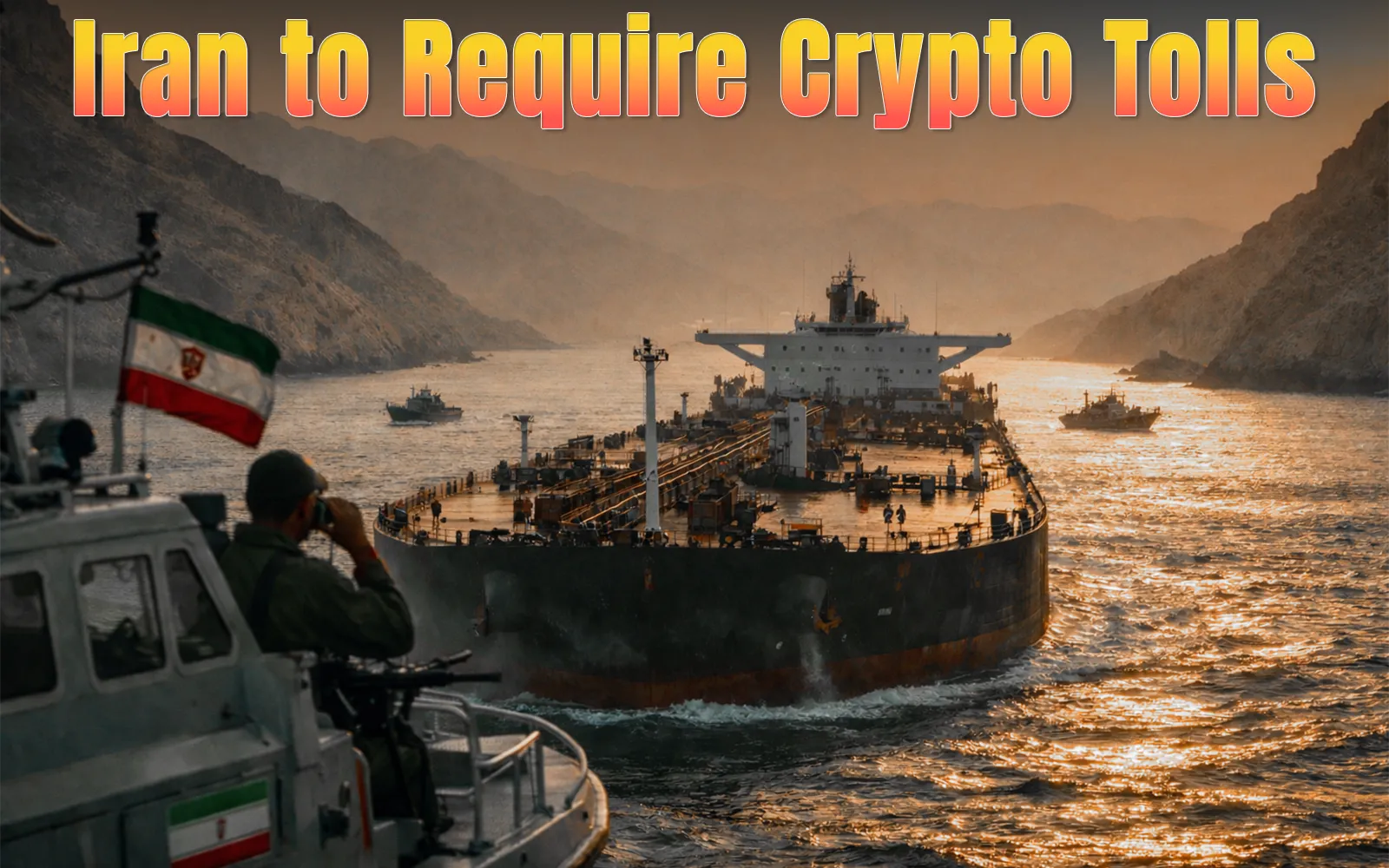
Iran to Require Crypto Tolls for Strait of Hormuz Transit
Iran is considering a new transit policy for ships passing through the Strait of Hormuz.
Under the proposal, oil tankers and other commercial vessels would be required to pay toll fees using cryptocurrencies. This move is taking place amid a fragile two-week ceasefire between the Iranians and Americans, where Iran is trying hard to keep its strong hold over the vital passage through which a good deal of international oil is shipped out.
Details on Crypto Toll System
As reported by Iranian authorities and stakeholders, vessels transporting crude oil are expected to provide details of their cargo through emails to determine the toll fees, which would be roughly $1 for each barrel of oil. The payments would be in cryptocurrencies, especially Bitcoin, to reduce any threats associated with sanctions and seizures of assets. Empty tankers might not pay the fee.
Hamid Hosseini, a spokesman for Iran's Oil, Gas and Petrochemical Products Exporters' Union, noted that it is vital to keep track of whatever comes into and out of the strait, since the toll fee is to prevent any transfer of arms during the cease-fire agreement. As soon as a ship company is approved, it is supposed to pay the toll fee using crypto in the shortest time possible.
Strategic Context and Industry Reaction
Strait of Hormuz : The Strait of Hormuz is a small passage between Iran and Oman that allows almost one-third of the oil shipped globally to pass through it. Even a slight alteration in the transit policies at the strait will have far-reaching consequences on energy and trade.
Shipping lines have taken a cautious approach to the policy, given its logistics, legal, and insurance complexities. The big players in the shipping sector have not yet been provided with comprehensive information regarding which digital currencies can be used and how international regulations will be dealt with.
Geopolitical and Financial Implications
Experts say the plan reflects Iran’s broader effort to bypass U.S. dollar-based settlement systems and counter the impact of longstanding Western sanctions on its financial transactions. Utilizing cryptocurrencies for a sovereign toll system, especially at a key oil transit point, would mark a novel use of blockchain technology at a national level.
However, the plan also raises questions about maritime law, enforcement mechanisms, and the potential for escalating tensions with Gulf states and Western allies, which have traditionally opposed any Iranian control over Hormuz’s operations.
Outlook for the Traders
Shipping firms and global traders are monitoring the situation closely, as Tehran’s crypto toll proposal could set a precedent for digital asset settlement in geopolitically sensitive logistics channels. Industry observers warn that the uncertainty may continue to suppress normal traffic levels through the strait until terms are clarified and an international consensus is sought.