







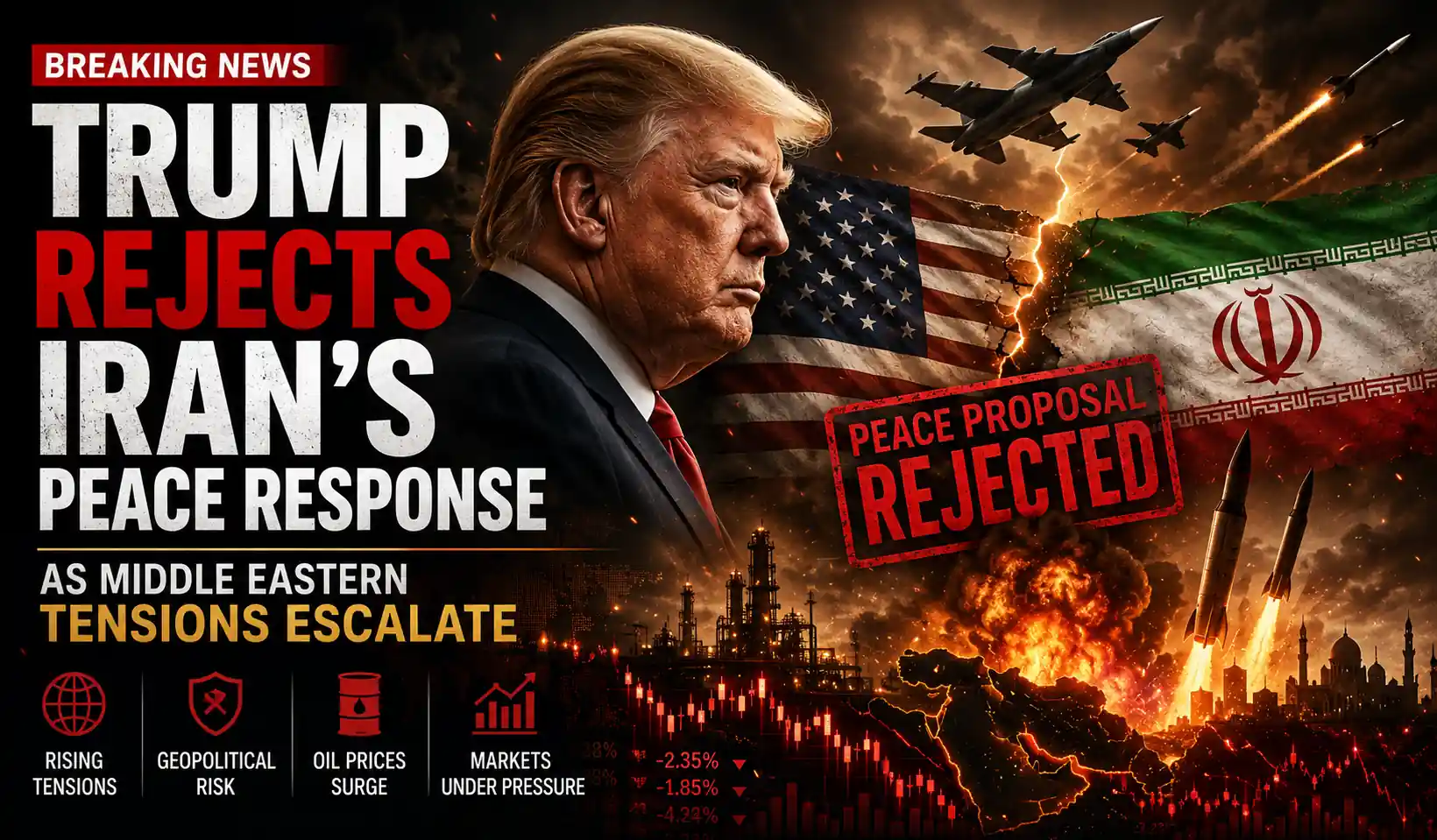
Trump Rejects Iran’s Peace Response as Middle Eastern Tensions Escalate
The relationship between the U.S. and Iran worsened when U.S. President Donald Trump reportedly refused the latest offer by Iran in a peace initiative as "unacceptable." The situation now introduces one more aspect of uncertainty in the global market environment because of the existing political uncertainties, rising costs of crude oil, and risks associated with investments.
From all indications, the proposed strategy aimed at reducing the tension between the two countries after months of tension between them resulting from various military sanctions, among others. It would appear that the negotiations have not been successful because of conflicting views concerning sanctions, military, and nuclear issues.
Iran-U.S. Negotiations Face Major Setback
This development occurred in the midst of an already delicate period for relations between the two governments. According to reports, the Iranian government set conditions, including assurances about sanctions relief as well as constraints on US military intervention in the region, as part of their response to the US offer.
In the case of Trump's decision, it clearly indicates that there is much more that needs to be addressed in the context of key issues facing both governments. It is believed that the failure of the talks would lead to uncertainties prevailing in the Middle Eastern region, especially through the energy path of the Strait of Hormuz, which carries about 20% of the world's oil production.
The market responded cautiously after his statement. Brent crude was trading high on account of the risk of disruption in oil supplies.
Global Markets React to Rising Geopolitical Risk
Uncertainty has already demonstrated its effect on certain financial markets, such as equity, commodity, and cryptocurrency markets. The price of bitcoin was affected by the volatility in the market owing to the shift of investors from a risk-on stance to a risk-off stance.
Earlier, important events of geopolitical nature in the Middle East had an effect on oil prices, expectations regarding the inflation rate, and the state of the market, too. As it has been discussed, geopolitical tensions may have increased the cost of energy across the globe, increasing the pressure on central banks amidst their struggle with inflation.
Moreover, gold prices have increased because of investors’ focus on safe havens, whereas the yield on Treasuries responded to changes in geopolitical risk expectations.
Oil Markets Remain Highly Sensitive
The Middle East is likely to contribute significantly to dictating the future trends in the international oil business. The Islamic Republic of Iran remains among the leading crude producers despite being subject to economic sanctions for a long period of time. Anything that happens between America and Iran may have repercussions on oil delivery lines.
According to data from global energy organizations, interruptions in the Strait of Hormuz always result in substantial increases in crude oil prices. The simple expectation of possible tensions can already affect the oil futures markets.
According to analysts, significant crude oil supply shortages may result in sharp price fluctuations on a short-term basis. This can exacerbate inflation rates in importing countries around Asia, Europe, and North America.
Investors Watch for Next Diplomatic Move
There are ongoing observations concerning how negotiations can be brought back on the table by any private discussions or third-party mediators in the international arena. Third-party interventions could occur as a result of the possible consequences that would follow from escalating the situation at hand, and these parties could include neighboring states or even international bodies.
As for the recent event, some experts might expect that private negotiations would take place for several weeks. But uncertainty will probably persist until both sides show signs of compromise.
For the time being, geopolitical events related to the U.S. and Iran are bound to be among the primary market drivers for the upcoming week.