



























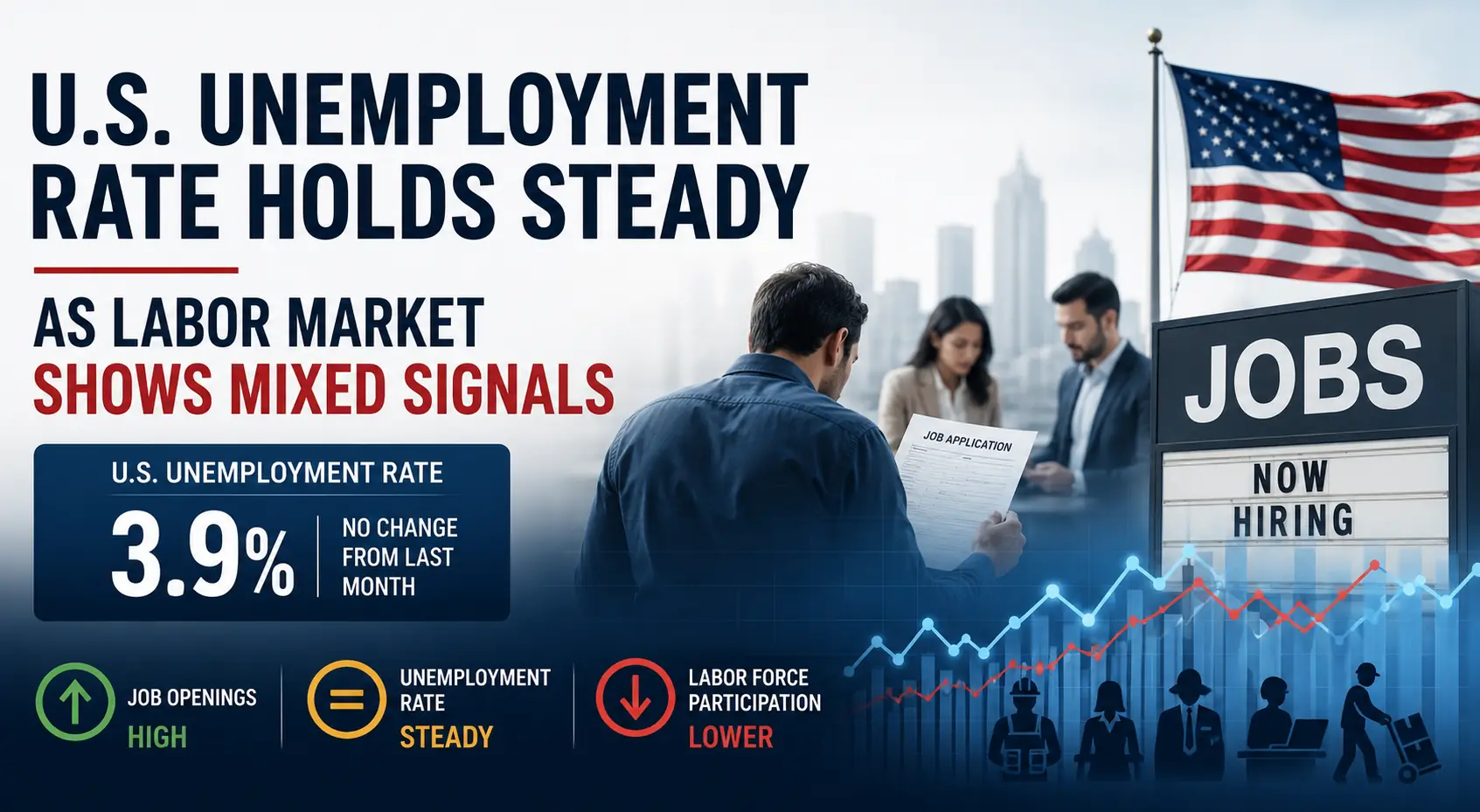
U.S. Unemployment Rate Holds Steady as Labor Market Shows Mixed Signals
The U.S. employment sector remained consistent throughout April 2026 as unemployment rates did not vary for most states during the month, according to the recent statistics released by the U.S. Bureau of Labor Statistics.
The total unemployment level across the country reached 4.1%, representing a slowdown in the economy, primarily due to years of rapid hiring processes and high pressure from increasing inflation. While some states reported an increase in jobs, others reported rising unemployment levels, indicating unequal economic growth between the states.
States dependent on technology, healthcare, and energy were performing well relative to those dependent on manufacturing and retail. According to the statistics recently provided, the states experiencing rising unemployment levels was fewer than those reporting falling unemployment levels. Unemployment levels in Nevada were higher than those of other states, while South Dakota and North Dakota remained among the states recording the lowest unemployment levels.
Job Growth Slowdown, But No Mass Job Cuts So Far
An increase in uncertainty, high-interest rates, and conservative spending on some sectors have resulted in slower employment creation in fields like retailing, finance, and transport. However, there have been no mass layoffs yet, and this has prevented unemployment from becoming higher than it currently is.
Employers are said to be very cautious about cutting back their workforces because of the previous shortages of staff that they faced during the pandemic recovery period.
Outlook for Fed Policy Still Key
The new employment numbers have come at a time when traders are carefully watching how the Federal Reserve System will act in terms of its interest rate policy in the near term. A stable rate of unemployment could help support the expectations of a relatively conservative monetary policy approach.
The stock market reacted calmly to the news since investors were more interested in inflation and salary increases than anything else.
Economic Uncertainty Still Present
Despite the relative stability of the labor market, the specialists pointed out the influence of such factors as economic decline, political instability, and reduced consumption on the future labor market.
As for April figures, they confirm that the country's economy performs quite successfully, even though its development is rather moderate.